Multi Zone Mini Split Calculator
Estimate indoor head sizes, indoor unit sum, outdoor condenser capacity, cooling diversity, line length derate, BTU/h, and tonnage for a multi-zone mini-split layout.
⚙Multi-Zone Presets
🌡Zone And Condenser Inputs
Calculation Breakdown
This calculator is a planning model. Verify manufacturer combination tables, maximum line length, connected indoor capacity limits, refrigerant charge rules, and low-temperature heating output before final selection.
📊Mini-Split Spec Comparison Grid
📐Indoor Head Sizing Reference
| Zone Load Range | Common Indoor Head | Tonnage Formula | Planning Note |
|---|---|---|---|
| 3,500-6,000 BTU/h | 6k head | 6,000 / 12,000 = 0.50 ton | Small bedrooms and low-load offices need modulation more than extra capacity. |
| 6,000-9,000 BTU/h | 9k head | 9,000 / 12,000 = 0.75 ton | Very common for bedrooms, dens, nurseries, and compact work rooms. |
| 9,000-12,000 BTU/h | 12k head | 12,000 / 12,000 = 1.00 ton | Fits many primary rooms where one wall head can mix air well. |
| 12,000-18,000 BTU/h | 18k head | 18,000 / 12,000 = 1.50 ton | Use for larger living areas, bonus rooms, and warm garage zones. |
| 18,000-24,000 BTU/h | 24k head | 24,000 / 12,000 = 2.00 ton | Usually a main-zone size, not a small-room choice. |
🏠Outdoor Multi-Zone Capacity Table
| Outdoor Size | Tons | Typical Indoor Sum Checked | Best-Fit Multi-Zone Pattern |
|---|---|---|---|
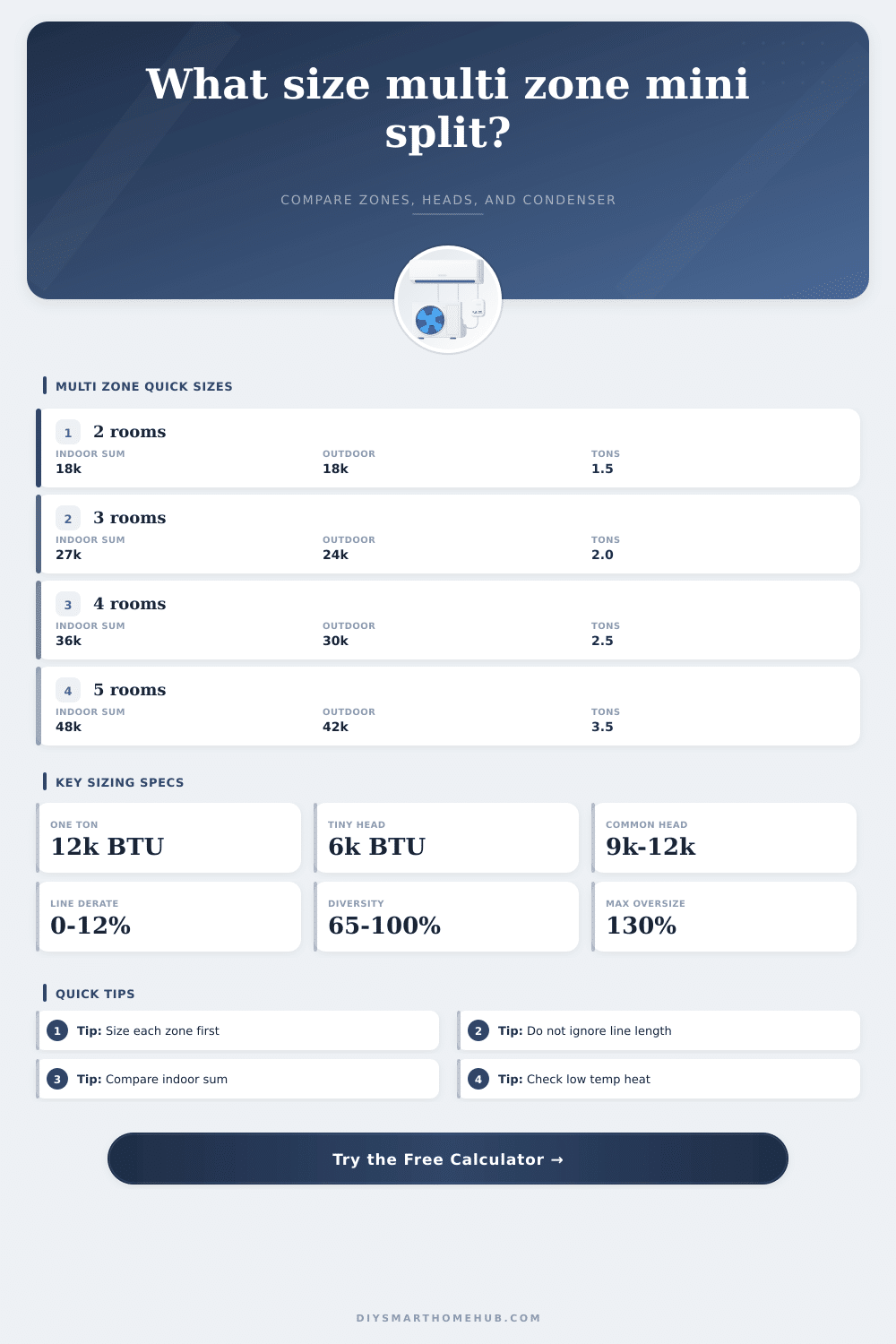
| 18,000 BTU/h | 1.5 tons | 12k-24k connected | Two bedrooms, office plus bedroom, or compact accessory space. |
| 24,000 BTU/h | 2.0 tons | 18k-30k connected | Three small zones or one main area plus one small zone. |
| 30,000 BTU/h | 2.5 tons | 24k-39k connected | Three to four moderate zones with diversity below peak. |
| 36,000 BTU/h | 3.0 tons | 30k-48k connected | Larger living zone plus two or three smaller rooms. |
| 48,000 BTU/h | 4.0 tons | 42k-60k connected | Large four-zone layouts, warm climates, or mixed-use spaces. |
🔧Line Length Derate Reference
| Total Equivalent Line Length | Capacity Factor Used | Derate Formula | Interpretation |
|---|---|---|---|
| Up to 100 ft | 1.00 | No planning derate | Short multi-zone runs usually preserve rated capacity in this model. |
| 125 ft | 0.98 | 1 - ((125 - 100) x 0.0007) | Small planning reduction for moderate total line length. |
| 175 ft | 0.95 | 1 - ((175 - 100) x 0.0007) | Capacity margin starts to matter, especially with high diversity. |
| 225 ft+ | 0.91 or lower cap | Derate capped at 12% | Check manufacturer line limits and additional refrigerant rules closely. |
🔀Diversity Factor Reference
| Layout Pattern | Typical Diversity | Formula Use | When To Raise It |
|---|---|---|---|
| Bedrooms only | 65%-75% | Zone load sum x diversity | Use higher values when all rooms face west or sleep schedules overlap. |
| Living plus bedrooms | 75%-85% | Main zone often dominates the total | Raise for open doors, large gatherings, or common afternoon peaks. |
| Open plan plus office | 85%-95% | Loads can overlap during workday heat | Raise if electronics, sun, and people loads peak together. |
| All zones peak together | 100% | No reduction from zone load sum | Use for conservative checks or same-exposure spaces. |
ℹMulti-Zone Sizing Tips
When choosing a multi-zone mini split system, it is important to understand how each of the separate rooms within a house can use both cooling and heating at the same time. A multi-zone mini split system use a single outdoor condenser unit to serve multiple indoor heads. The outdoor condenser unit will have to provide enough capacity to each of the indoor heads at the same time through a single refrigerant circuit.
Each of the separate rooms within a house will have different cooling and heating requirement. These individual loads of each room have to be balance out with the total capacity of the outdoor condenser unit for the system to effectively serve each of the separate rooms within a house. The first step in choosing a multi-zone mini split system is to determine the design load for each of the spaces within the house.
How to Choose a Multi-Zone Mini Split System
The design load calculation will use factors like the insulation of each of the rooms, the orientation of the windows within each of the rooms, and the amount of heat that is gain within each of those rooms. Based off the design load for each of the rooms, it is also important to determine the size of each indoor head. People can choose to purchase an indoor head that is the same size as the design load for that room or they can choose an indoor head that is slightly larger than the design load for that room.
Using an indoor head that is slightly larger than the design load will allow for the indoor head to not have to always run at maximum speed within each of the rooms. A calculator can be used to determine these size. In addition to considering the design load for each of the rooms, it is also important to consider the outdoor capacity of the mini split unit by introducing the concept of the diversity factor.
The diversity factor is a measurement of the likelihood that each of the indoor heads will reach their maximum load at the same time. It is rare for all of the rooms in a house to reach their maximum load at the same time. For example, it is unlikely for the bedrooms to each reach their maximum load at the same time as it would be difficult for all of the sleeping individuals in each bedroom to simultaneously become very hot.
However, it is possible for the living area and the office to reach their maximum load at the same time if both of those rooms have windows that open towards the sun. By using a higher diversity factor, it is possible to design the mini split system such that the system will not be required to run each of the indoor heads at 100% of their maximum capacity at the same time. This will introduce the concept of a smaller outdoor condenser unit.
Using a diversity factor that is set too high, however, could create issue in which the outdoor condenser is not powerful enough to cool the house during the hottest afternoons of the summer, for instance. A calculator can be used to test the diversity factor. Another important factor to consider when purchasing a mini split system is the length of the refrigerant lines.
Long refrigerant lines will create a pressure drop within the system. In addition, long refrigerant lines will allow for heat gain within the refrigerant lines which will also reduce the capacity of the system to cool the indoor air within each of the rooms within the house. If the length of the refrigerant lines is under one hundred feet, the mini split system will have a capacity that is near its full output.
If, however, the total length of the refrigerant lines is longer than one hundred feet, each additional foot of refrigerant lines will reduce the capacity of the system. You should consider the length of the refrigerant lines during the installation of the mini split system. If the outdoor condenser unit is to be installed in a location that is very far from each of the indoor heads, there will be a noticeable reduction in the performance of the system.
The size of the indoor heads will also impact the mini split system. If you select indoor heads that are much larger than the design load of each of the rooms, the indoor heads will short-cycle. Short-cycling of indoor heads can cause the indoor heads to struggle to remove humidity from those rooms.
An indoor head that is too small for the design load of each of the rooms will continuously run during extreme weather condition within the area and will be unable to reach the desired temperature. Reference tables can be used to determine indoor head sizes that is associated with design loads. Using these tables will ensure that the mini split system is within the limits of the indoor heads.
The way that a person may use each of the rooms within the house will also introduce some variability into the requirements of the mini split system. If one of the rooms has a variety of different uses, this will impact the diversity factor of the mini split system. For these reason, it is a good idea to run each of these different inputs through the calculator for the mini split system more than once.
Each time the inputs can be manipulated to use different diversity factors and different refrigerant line lengths. By using different values within the mini split system calculator, it is possible to determine the areas of the system that may receive extra capacity and which areas of the mini split system may be tight on its capacity. The goal in purchasing a mini split system that is to be used in the house is to create a layout for the indoor heads and the outdoor condenser unit that is able to meet the demands of each of the rooms within the house.
At the same time, however, the total capacity of the indoor heads should not be so high that the outdoor condenser unit is not able to effectively supply each of those indoor heads with the necessary air conditioning. By correctly calculating each of the design loads, using the proper diversity factor, and correctly determining the length of the refrigerant lines, the mini split system will remain quiet and be able to maintain steady temperature within each of its rooms. The mini split system will also avoid the need for various and expensive adjustment to the outdoor condenser unit if the mini split system is found to be undersized after the installation of the indoor heads.