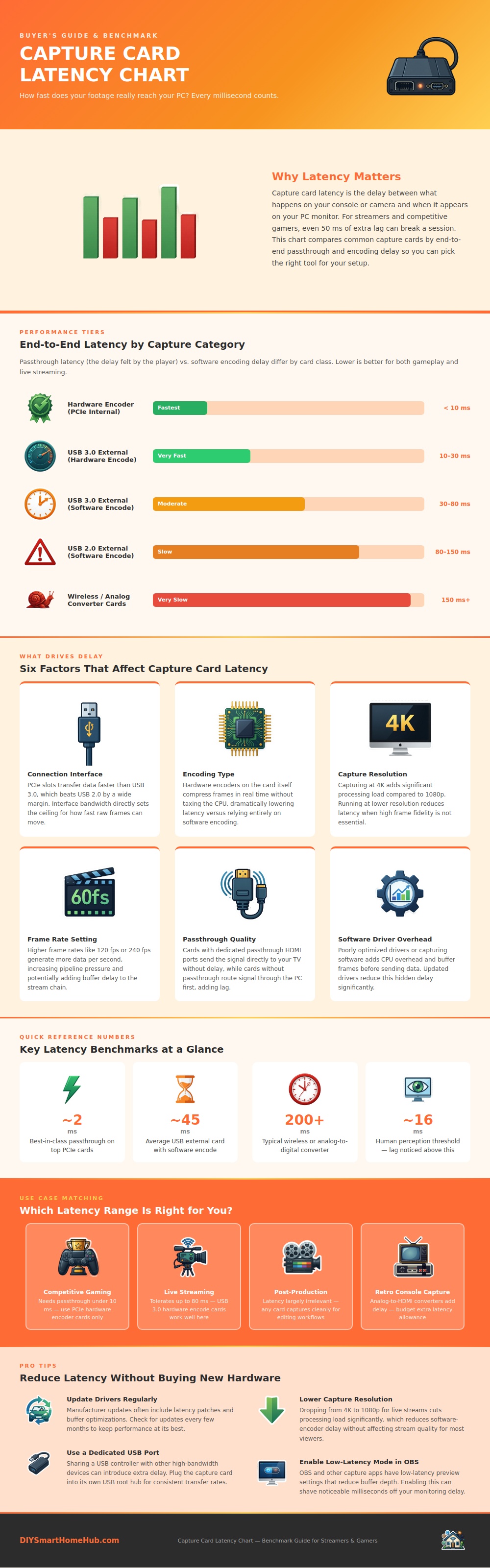
Capture card latency are the delay between the actions you take on your game console and the visual feedback that display on your monitor. The signal from your console have to pass through several piece of hardware and software before it reach your monitor. High capture card latency will make the visuals behind your actions on the game console.
The latency of a capture card will differ depending on the type of capture card that are used to capture the signal from your console. The type of capture card you use will impact the latency that you experiences from your capture card. If you use an internal capture card that feature hardware encoders, your capture card latency will be low.
Why Capture Cards Cause Lag and How to Reduce It
If you use a USB 3.0 capture card that feature hardware encoders, your latency will be in the moderate range. However, USB 3.0 capture cards will feature more higher latency then internal capture cards. If you use a capture card that rely on your computer to encode the video signal, your capture card will have high latency.
Finally, wireless and analog converters has high latency due to the processing requirements for these wireless and analog signals. The type of capture card you use will determine your latency, so make sure to select an appropriate purchase based off the latency requirements of your specific activity. Another factor that will impact your capture card latency is the method of connection of the card.
If your capture card sit in a PCIe slot, you will experience low latency. However, if your card use a USB cable to connect to your computer, your latency will be higher. Another impact factor is the encoding process of the video signal.
If your capture card feature hardware encoders, your latency will be low. However, if your capture card require software encoding of the video signal, the latency will be higher. The next factor that will impact the latency of your capture card is the resolution and frame rate of the video signal from your console.
If the resolution are high (4K) and the frames per second are high (120 fps), the amount of data that must pass through your capture card will be high. Thus, latency will be higher at these specification. A way to reduce the latency of your capture card is to reduce the resolution to 1080p. 1080p require less data to pass through the capture card.
Finally, the passthrough port on your capture card can impact your latency. If your capture card feature a passthrough port, your signal will go directly to your television. This avoid the latency caused by the signal traveling through your computer.
There are several technical adjustment that you can make to manage the latency of your capture card. For starters, make sure that the drivers for your capture card are up to date. The latest version of the drivers will feature improvements that will reduce the buffer times for the capture card and reduce the latency of the signal.
Additionally, make sure to use a USB port on your computer that isnt share with other devices. Finally, if your recording software allow for a low-latency preview mode, use this mode. This will reduce the latency created within the preview monitor of your recording software.
While these steps may not make your slow capture card faster, they will ensure that your card function in the most efficient way possible. The human eye can detect the latency of your capture card once the latency reach around sixteen milliseconds. At latencies above sixteen milliseconds, your brain and eyes will begin to feel a disconnect between the actions that you take on the game console and the visual feedback that occur on your monitor.
At latencies below sixteen milliseconds, your visuals will appear to be in sync with the actions that you take on your console. Therefore, ensure that you select the appropriate type of capture card for your gaming activity based on the detectable level of latency for your specific activities.