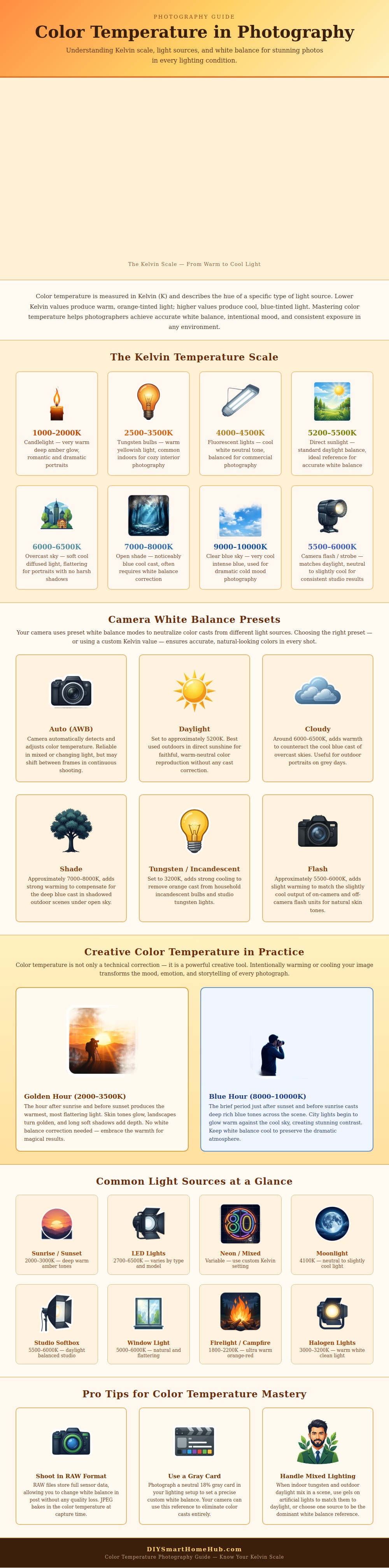
Color temperature are a measurement of the color of light. Color temperature determine how a photograph looks to the viewer. Color temperature can make a photograph appear warm or coolly.
When color temperature is low, the light will appear orange to amber. This warm color temperature is common in firelight and old light bulb. When color temperature is high, the color of the light will appear to be blue.
How Color Temperature Affects Photos
This cool color temperature is common in open shade or an open sky. Different type of light sources emit different amount of color temperature. Therefore, it is important for individuals to understand color temperature so that they can control the way in which their camera capture light from various light sources.
Many cameras has the setting for auto white balance. This setting ensure that the colors in the photograph are neutral. Auto white balance settings can fail if the light source change from one location to another.
For instance, when an individual move from a tungsten lamp to a window, the auto white balance will struggle to adjust the colors of the subject in the photograph. To adjust for these varying color temperatures, the camera have a series of preset buttons. The daylight button is use for outdoor light sources.
The cloudy button allow for the addition of warmth to the colors to balance the amount of blue light reflect from the clouds. The shade button adds even more warmer to the colors. The tungsten button remove the orange colored light from the household bulb.
The flash button is use to allow for the on-camera flash to not conflict with the light from the sun. These setting provide a series of shortcuts for the individual to select the color temperature of the light that the subject reflect from the photograph. Color temperature play an important role in the color mood of the photograph.
Warm color can convey the idea of healthy skin and inviting landscape. Cool colors can make a city scene appear quiet and mysterious. By correcting the colors of each photograph to be neutral, the photographer may lose the purpose of color temperature in the photograph.
It is also possible for the photographer to encounter mixed lighting in the subject of their photograph. Mixed lighting are the combination of two different color temperatures within the same photograph. For instance, within a room may be both lamp and daylight.
Such mixed lighting in the photograph may create the impression of incorrect color to the viewers of that photograph. In such case, the photographer can either choose to balance the colors for the most important light source in the photograph or they can adjust the color temperature of the light source themselves. One of the best way to adjust color temperature within a photograph is to shoot the subject in RAW file format.
RAW file contain the original sensor data from the camera. Since the RAW file contain this original data, the computer can adjust the color temperature of the photograph. Another tool that photographer use to gain precision in their color temperature setting is the use of a gray card.
By placing the gray card in the same lighting as the subject, photographers can take a reading of the color that the camera should use for the subject in the photograph. Common mistake that many photographer make are relying too much on the auto white balance setting and overcorrecting the color temperature of the subject. If photographers rely on the auto white balance setting, especially when the subject is exposed to different light source, the skin tone of the individuals in the photograph may shift.
Overcorrecting the color temperature of the subject will make the colors within the photograph look flatly. Therefore, photographers should look at the dominant light source within the subject. They can then select the closest preset color temperature setting and review the photograph that is display on the back of the camera.
Making small adjustment to the color temperature within the camera during the taking of the photograph is better than making the same correction after the photograph is taken. Finally, the photographer can use color temperature on purpose to create a specific feeling from the audience regarding the subject in the photograph. To use color temperature on purpose, the photographer must pay close attention to the light in the photograph.
Based off the feeling that the photographer want to create from the subject in the photograph, they can decide whether or not to adjust the color temperature of the photograph.