⚡ Frequency to Energy Converter
Calculate photon energy from frequency or wavelength — get results in Joules, eV, wavenumbers & more
| EM Region | Frequency Range | Wavelength Range | Energy Range (eV) | Energy Range (J) |
|---|---|---|---|---|
| Radio Waves | 3 kHz – 300 GHz | 1 mm – 100 km | 1.2×10⁻⁹ – 1.2×10⁻⁶ | 2×10⁻‸ – 2×10⁻⁵ |
| Microwave | 300 MHz – 300 GHz | 1 mm – 1 m | 1.2×10⁻⁶ – 1.2×10⁻ | 2×10⁻⁵ – 2×10⁻⁴ |
| Infrared (Far) | 300 GHz – 6 THz | 50 – 1000 µm | 1.2×10⁻ – 0.025 | 2×10⁻⁴ – 4×10⁻ⁱ |
| Infrared (Mid) | 6 – 100 THz | 3 – 50 µm | 0.025 – 0.41 | 4×10⁻ⁱ – 6.6×10⁻⁰ |
| Infrared (Near) | 100 – 430 THz | 700 nm – 3 µm | 0.41 – 1.77 | 6.6×10⁻⁰ – 2.8×10⁻¹⁹ |
| Visible Light | 430 – 750 THz | 400 – 700 nm | 1.77 – 3.10 | 2.8×10⁻¹⁹ – 5×10⁻¹⁹ |
| UV (Near) | 750 THz – 1.5 PHz | 200 – 400 nm | 3.10 – 6.2 | 5×10⁻¹⁹ – 10⁻¹⁸ |
| UV (Extreme) | 1.5 – 30 PHz | 10 – 200 nm | 6.2 – 124 | 10⁻¹⁸ – 2×10⁻¹⁷ |
| Soft X-Ray | 30 PHz – 3 EHz | 0.1 – 10 nm | 124 – 12,400 | 2×10⁻¹⁷ – 2×10⁻¹⁵ |
| Hard X-Ray / Gamma | > 3 EHz | < 0.1 nm | > 12,400 | > 2×10⁻¹⁵ |
| Frequency | Wavelength | Energy (eV) | Energy (J) | Wavenumber (cm⁻¹) |
|---|---|---|---|---|
| 100 MHz (FM Radio) | 3 m | 4.14×10⁻⁷ | 6.63×10⁻⁶ | 0.003 |
| 2.45 GHz (WiFi) | 12.2 cm | 1.01×10⁻⁴ | 1.62×10⁻ | 0.082 |
| 1 THz | 300 µm | 4.14×10⁻ | 6.63×10⁻ | 33.36 |
| 100 THz | 3 µm | 0.414 | 6.63×10⁻ⁱ | 3336 |
| 428.5 THz (700 nm) | 700 nm | 1.77 | 2.84×10⁻¹⁹ | 14,286 |
| 545.4 THz (550 nm) | 550 nm | 2.25 | 3.61×10⁻¹⁹ | 18,182 |
| 666.4 THz (450 nm) | 450 nm | 2.76 | 4.42×10⁻¹⁹ | 22,222 |
| 999.3 THz (300 nm) | 300 nm | 4.13 | 6.62×10⁻¹⁹ | 33,333 |
| 3×10¹⁷ Hz (10 nm) | 10 nm | 124 | 1.99×10⁻¹⁷ | 10⁶ |
| From | To Joules (J) | To eV | To cm⁻¹ | To THz |
|---|---|---|---|---|
| 1 Joule | 1 J | 6.242×10¹⁸ | 5.034×10 | 1.509×10 |
| 1 eV | 1.602×10⁻¹⁹ | 1 eV | 8,065.5 | 241.8 |
| 1 meV | 1.602×10⁻ | 0.001 | 8.066 | 0.2418 |
| 1 keV | 1.602×10⁻¹⁶ | 1000 | 8.066×10⁶ | 2.418×10⁵ |
| 1 MeV | 1.602×10⁻¹ | 10⁶ | 8.066×10⁹ | 2.418×10⁸ |
| 1 cm⁻¹ | 1.986×10⁻ | 1.240×10⁻⁴ | 1 | 0.02998 |
| Medium | Refractive Index (n) | Speed of Light (m/s) | Wavelength Scale Factor | Energy Change |
|---|---|---|---|---|
| Vacuum | 1.000 | 2.998×10⁸ | 1.000× (reference) | No change |
| Air | 1.0003 | 2.997×10⁸ | 0.9997× | No change |
| Water | 1.333 | 2.249×10⁸ | 0.750× | No change |
| Glass (typical) | 1.500 | 1.999×10⁸ | 0.667× | No change |
| Diamond | 2.420 | 1.239×10⁸ | 0.413× | No change |
| Silicon (IR) | 3.500 | 8.566×10⁷ | 0.286× | No change |
Frequency converter is simply a device that receives alternating electricity in one frequency and changes it to another alternating electricity in an entirely other frequency. Whether it is made up of electronic parts or mechanical parts, the basic idea stays same: energy enters in one frequency and exits in another.
When one mentions electrical energy, frequency simply points how many complete cycles the alternating electricity passes in a second. Frequency converter changes that cycle number… Measured in hertz; so one can receive more or fewer cycles according to the needs.
How a frequency converter works
In some uses, the output frequency results even many times higher than the input. Seriously note that this process operates separate of thoughts about voltage or current.
Here everywhere causes become practical: frequency converter receives entering energy in set voltage and frequency, later it delivers different voltage and frequency level on the other side. It matters a lot, because that allows engines to operate at various speeds without need to play with regular pulleys or exchange outside adapters. Such flexibility is huge in industrial places, where it spares time and money.
That converter helps with voltage testing, various speed controls and motor efficiency in industrial, military and renewable energy systems.
The basic method for the most of frequency converters include some main stages. The entering AC voltage first converts to DC. Therefore, that DC then gets chopped at high frequency to form the wanted output waveform.
More carefully: AC adjusts to DC, pass through screening and later back to AC in the intended frequency. That conversion stage depends on parts called IGBTs, that quickly switches and form the output waveform.
Voltage conversion? That is easy, converter cares about it without problems. Conversion of AC to DC also simple using won diode or four-diode bridge.
But frequency conversion, on the other hand. Here lies the real challenge.
Various frequency converters are designed for separate tasks. One kind takes 60-hertz energy in 120 or 208 volts and gives 400 hertz, while it keeps the same voltage level. Other receives entering voltage between 160 and 190 volts at 50 hertz and delivers set 120 volts at 60 hertz.
One has choices of battery-backed inverters to standalone devices, although good quality frequency converters usually cost around three thousand dollars. According to your needs about voltage, maybe you need to add another converter above themainstream unit itself.
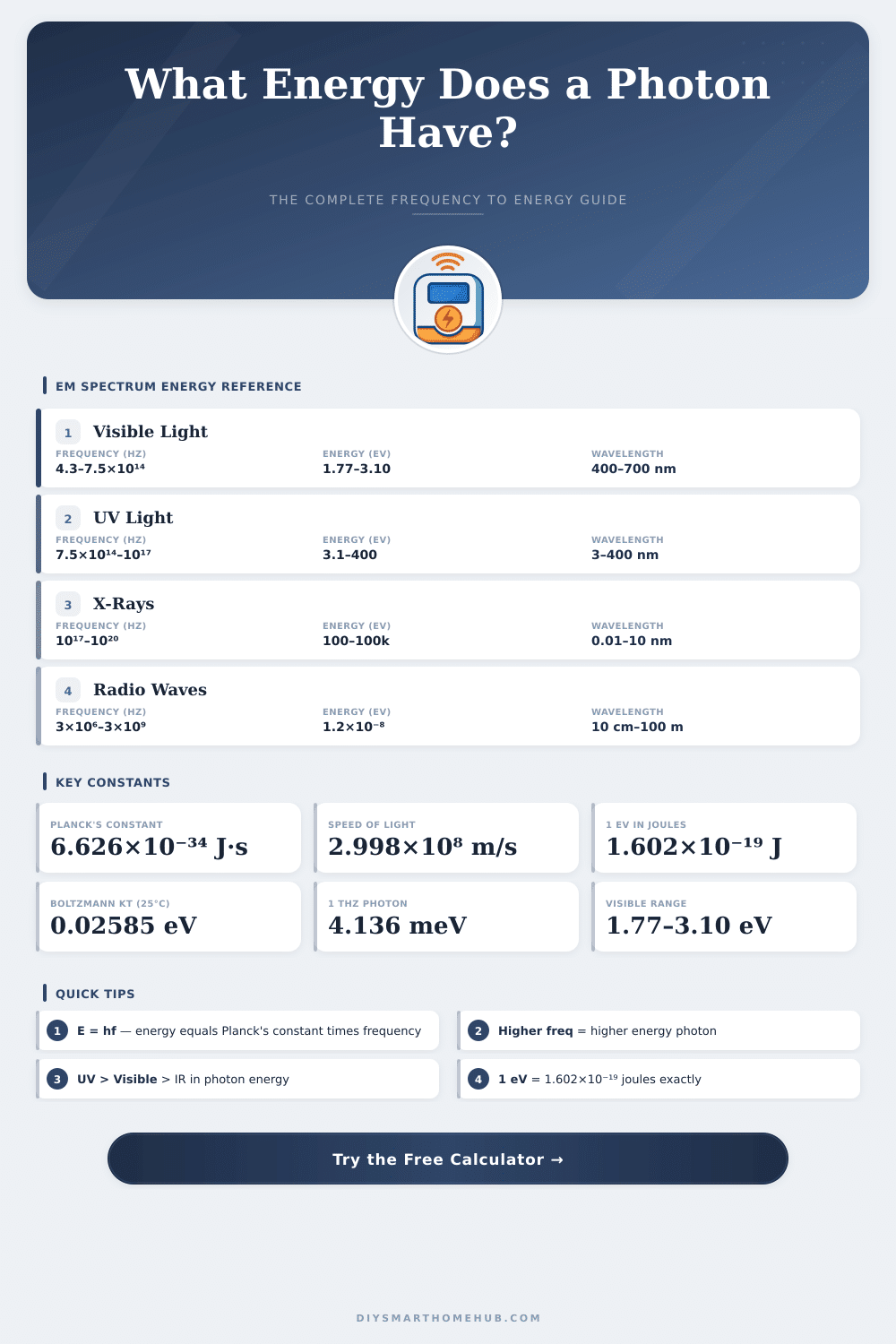
On an entirely other note, there are also calculators to convert frequencies to energies. Enter a frequency value, and the calculator changes it to energy by means of the link between photons and frequency. The formula: energy of photon matches Planck constant times the frequency.
Flip it, and one can count frequencies from energy for a photon by sharing the energy by means of Planck constant.