When building a computer, one must chooses the memory for the system. There are two measurement of memory speeds: the speed of the memory and the DDR4 latency of the memory. The speed of the memory is the frequency at which the memory can operate.
However, the DDR4 latency of the memory is an amount of time that pass between when the memory receives a request and when it can begin to provide the data to the processor. The DDR4 latency is an essential specification in that it determine how quickly the memory can respond to requests from the processor. While a person may focus on the speed of the memory, that same person should also focus on the DDR4 latency because the DDR4 latency impact the systems responsiveness.
How to Choose DDR4 Memory: Speed and Latency
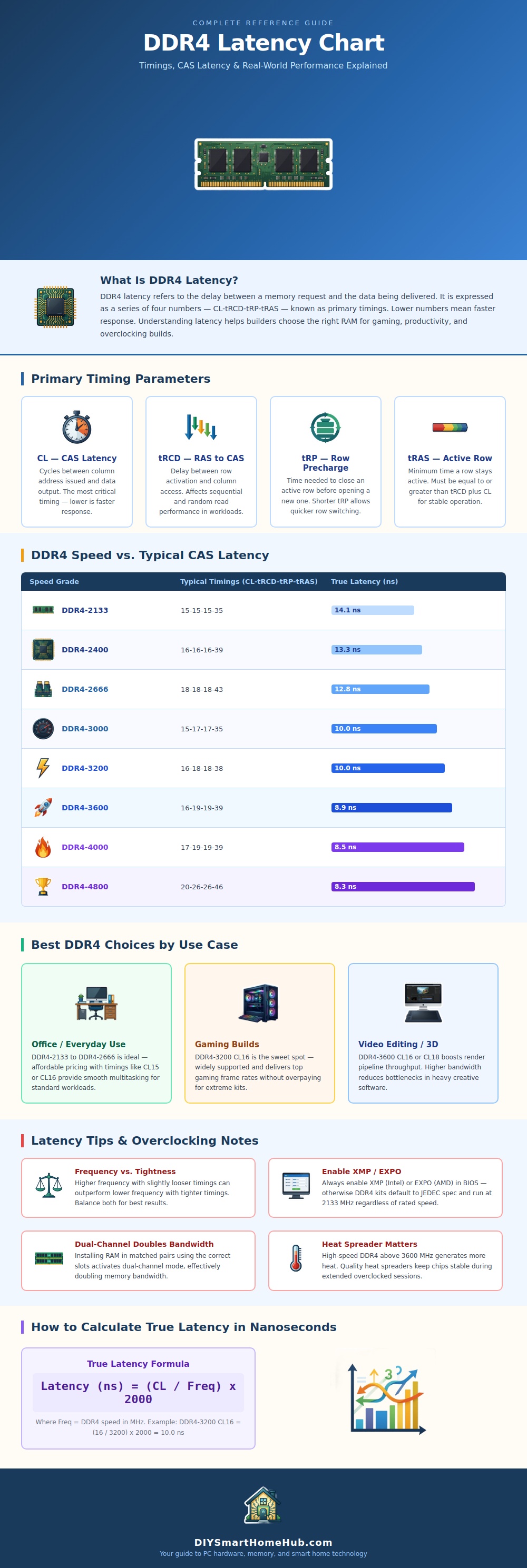
There are four primary numbers that describe the latency speeds of DDR4 memory: CL, tRCD, tRP, and tRAS. Each of these four values describes the internal step of the memory chip that occur between when the memory receives a request and when it can provide the data to the processor. CL stands for CAS latency, which measure the time delay between when a memory address is requested and when the data becomes available.
TRCD stands for row access time, which is the time between when a row of data is accessed and when the data is provided. TRP stands for row precharge time, which is the time between when a row is deactivated and when it can be accessed again. Lastly, tRAS stands for row access time, which is the time between when a row of data is accessed and when that row must remain active to receive the data.
Lower values for each of these specifications mean the memory can respond to the processor more quick. The speed of the memory also impacts how quickly the memory can respond. One of the most important measurements regarding memory is true latency.
True latency is a measurement of the delay of the memory in nanoseconds. Additionally, this is an accurate means of comparing the latencies of DDR4 memory modules because raw timing does not take into account the memory speed. To calculate the true latency, divide the CAS latency by the memory speed in megahertz, and then multiply that value by two thousand.
The result will be the memorys true latency in nanoseconds. This measurement will indicate how many billionths of a second pass before the memory can deliver the data that the processor requested. A memory with a higher speed may have higher timing numbers but still have a lower true latency because each cycle take up less time with the higher speed.
Depending on the tasks that a computer will perform, there are different requirement for DDR4 memory. Machines that perform office tasks do not require high speeds in their DDR4 memory because office tasks mostly wait for the data to be retrieved from storage or the user to perform a task. Gaming systems require high memory speeds and DDR4 latency because the memory must provide data to the processor to increase the frame rate of the games played.
Yet, after a point, the benefits of faster DDR4 memory will plateau. Video editing and 3D software packages require high memory speeds because such tasks must move large data sets from one device to the next. For computers that a person will use for these tasks, a person should select memory with a high memory speed with reasonable timing value.
Memory overclockers will increase the frequency of the memory. Yet, increasing the memory frequency will require the increase of the memory timing specifications to ensure that the system is stable at the increased memory speeds. Even if a memory overclocker increases the memory timing, the overclocker can still increase the true latency of the memory.
When a person performs the overclocking of the memory modules correctly, the true latency will remain low. Additionally, the memory profile should be enabled. This memory profile ensure that the memory operates at the intended frequency.
If the memory profile isnt enabled, the memory will operate at its base specifications. Another way to increase the memory bandwidth is to use a dual-channel operation. A dual-channel operation of the memory increases the bandwidth of the memory by installing the memory modules into the correct slot on the computer.
Using a dual-channel operation will increase the bandwidth of the system, but it will not impact the timing of the memory. Using a dual-channel operation also allow for the memory to dissipate the heat that is created during operation. Faster memory modules will generate more heat than slower memory modules because they need to provide more data to the processor.
Additionally, faster memory modules will require extra voltage to be supplied to the memory modules to increase their speed. Increasing the voltage of the memory modules will cause them to generate more warmth. Memory modules that dont have adequate heat spreaders may become unstable or may have to throttle their memory speeds because the memory is too hot to continue to operate at those speed.
Finally, people should select the DDR4 memory based off the tasks that will be performed on the computer. People should not select DDR4 memory with the highest speed available. Instead, by understanding the specifications of DDR4 memory and latency, a person can use these specification to determine which DDR4 memory will be best suited to the computer that is being built.