Brightness levels is measured in a unit called nits. Nit levels are used to describe how much light a television will emit. If two televisions are viewing the same scene, one television may look flat and the other may look more realistic because of the difference in brightness levels.
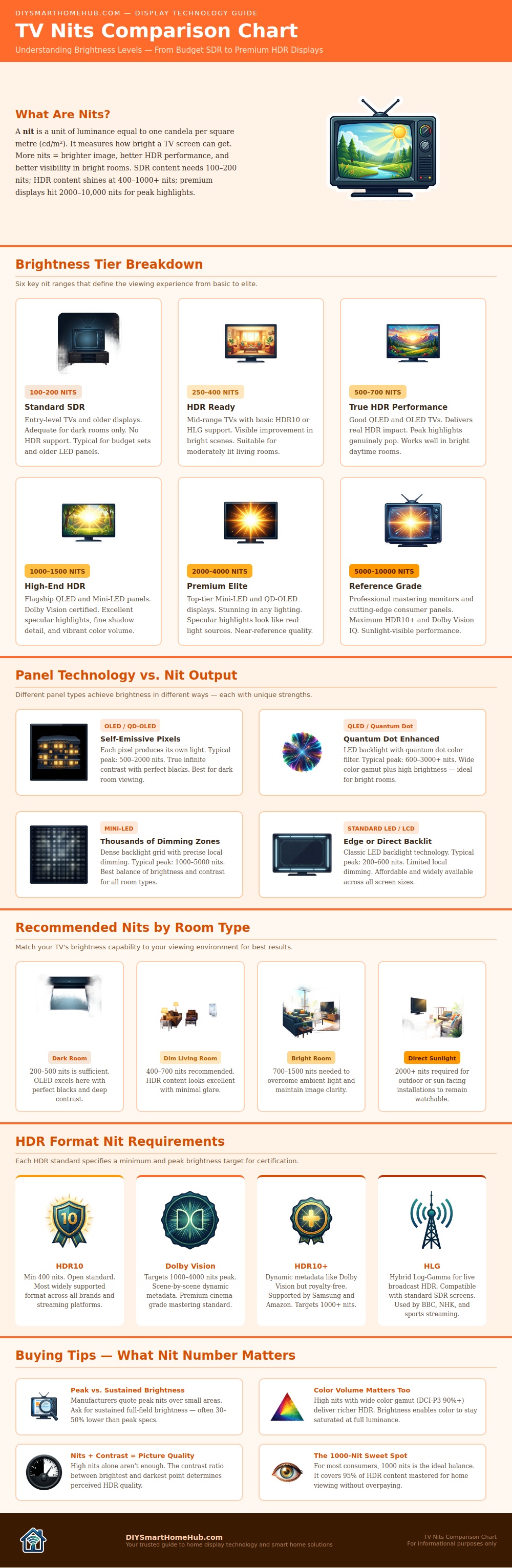
Understanding the brightness levels of the televisions that is available can help you to understand how the television will perform in different lighting environment. There are six different brightness level for televisions, each of which can be associated with a different type of viewing environment. The lowest brightness tier is sold as budget televisions and many older televisions.
Choose the Right TV Brightness for Your Room
These televisions often cant display the screen clear in the presence of ambient light in the room. The next brightness level in the range include televisions with basic high dynamic range (HDR) support, but the level of support that the televisions provide is still limited to televisions with open curtains or if there is alot of light in the room. Higher brightness levels provide support for HDR content to look betterer on the television, and television mastering professional once used the highest brightness level available.
The brightness level of a television must be matched to the type of room in which it will be placed. If you place the television in a dark room, high contrast is preferred than brightness. If, however, you place the television in a bright living room, then the brightness of the television is a requirement for countering the brightness of the environment.
The television must be able to maintain high brightness on its screen, especially since living rooms are very bright rooms. The type of panel that the televisions uses determines the brightness of the screen that the televisions can reach. The types of panels include OLED, LED with quantum dot layer, and Mini-LED.
OLED televisions work by lighting each individual pixel on the screen. Because lighting each pixel allows blacks on the screen to be perfect, OLED televisions cannot reach as high of brightness levels as other brands. LED televisions with quantum dot layers produce higher brightness on their screens.
This makes them a preferred television for those who have windows in their rooms. Mini-LED televisions use thousands of tiny dimming zones to their screen. These dimming zones allow the television to maintain bright areas and dark areas on the screen, and it allows the television to reach high brightness levels.
The amount of ambient light in the room that the television will be placed in will determine the brightness of the televisions that you seek to purchase. Televisions with low ambient light in the surrounding area should have a brightness target that is lower then televisions that will be placed in rooms with high ambient light. Direct sunlight is a specific environment that will require a television with high brightness levels.
Most televisions are not designed to compete with the brightness of direct sunlight. If the room in which the television will be placed has direct sunlight exposure, the brightness level of the television cannot be an optional feature. Many televisions use HDR formats to display their content.
These formats require a brightness level for the televisions to correctly display the content. If the brightness level of the televisions does not allow for the content to reach the brightness levels that are required for the HDR formats, the televisions will not display the content as it is intended to look on the screen. To ensure that your televisions can properly display content with HDR formats, you should check for both the HDR format that the televisions use and the brightness levels that the televisions can output.
By checking both of these features, you can avoid disappointment in your televisions performance with HDR content. Many people make the mistake of only considering the brightness levels of the televisions that the manufacturers advertise. The brightness levels that are advertised are typically for the smallest possible window on the screen.
The brightness of the televisions in the smallest window does not reflect the brightness capabilities of the televisions for full-screen scenes. Instead, people should consider the brightness of the televisions for sustained full-field brightness. This feature is more important for televisions in terms of viewing content for everyday use.
Sustained full-field brightness levels are lower than the advertised brightness levels for televisions. Another feature to consider when purchasing televisions is brightness levels with color saturation. Brightness is of no use if the colors on the screen get washed out due to high brightness.
Brightness levels of 1000 nits and above are significant for many viewers. For televisions whose brightness levels are below 1000 nits, viewers can still experience high dynamic range (HDR) features, but they will have to open their curtains to view the screen clear. For televisions whose brightness levels are above 1000 nits, they will be paying for a feature that may be of limited use to those whose rooms may be bright.
The televisions that you purchase should of be based off the way that you plan to use the televisions in your room. A television that is of the correct brightness for your room will look better than one with high brightness that is used in the wrong room. Ensuring that the brightness of the televisions match the features of your room is the best way to ensure that your televisions will deliver an improvement to the content that you watch.