Generator Cable Size Calculator
Estimate generator feeder or extension cable gauge from load amps, voltage, phase, run length, conductor metal, derating, and allowable voltage drop.
Calculator results are planning estimates based on common ampacity columns, conductor circular mil area, and voltage-drop formulas. Confirm the final cable, plug, inlet, transfer equipment, and local code requirements before use.
| Conductor | Circular mils | Cu 75 C amps | Al 75 C amps | Typical generator use |
|---|---|---|---|---|
| #10 AWG | 10,380 | 35 A | 30 A | Small 30 A short run |
| #8 AWG | 16,510 | 50 A | 40 A | 30 A longer cord |
| #6 AWG | 26,240 | 65 A | 50 A | 50 A inlet or RV |
| #4 AWG | 41,740 | 85 A | 65 A | 60 A feeder with drop |
| #2 AWG | 66,360 | 115 A | 90 A | 100 A short feeder |
| 1/0 AWG | 105,600 | 150 A | 120 A | 100 A longer feeder |
| 3/0 AWG | 167,800 | 200 A | 155 A | 150 A feeder |
| 250 kcmil | 250,000 | 255 A | 205 A | Large standby feeder |
SOOW flexible cord
Portable generator cords commonly use flexible copper conductors and durable oil-resistant jackets. Size by cord ampacity, plug rating, and voltage drop.
THHN/THWN-2 in conduit
Often used between an outdoor inlet, disconnect, and transfer equipment. Conduit fill, terminal temperature, and conductor grouping affect the final size.
Aluminum feeder cable
Useful for long fixed standby runs when equipment lugs are rated for aluminum. It usually needs a larger size than copper for the same drop.
Temporary power spider feed
Jobsite generator distribution favors flexible cable, robust strain relief, and conservative voltage drop for tools with motor starting current.
| Load type | Suggested drop | Why it matters | Good calculator setting |
|---|---|---|---|
| Electronics and UPS loads | 2 percent | Keeps voltage tighter under transfer and inverter loads | 2 percent sensitive load |
| Home inlet feeder | 3 percent | Common balance of cable size and voltage stability | 3 percent feeder target |
| Mixed RV or workshop load | 4 percent | Works when loads are not all continuous at once | 4 percent mixed load |
| Short-duration tool load | 5 percent | May be acceptable for temporary non-sensitive loads | 5 percent short-duration load |
| Project | Load and voltage | One-way length | Often lands near |
|---|---|---|---|
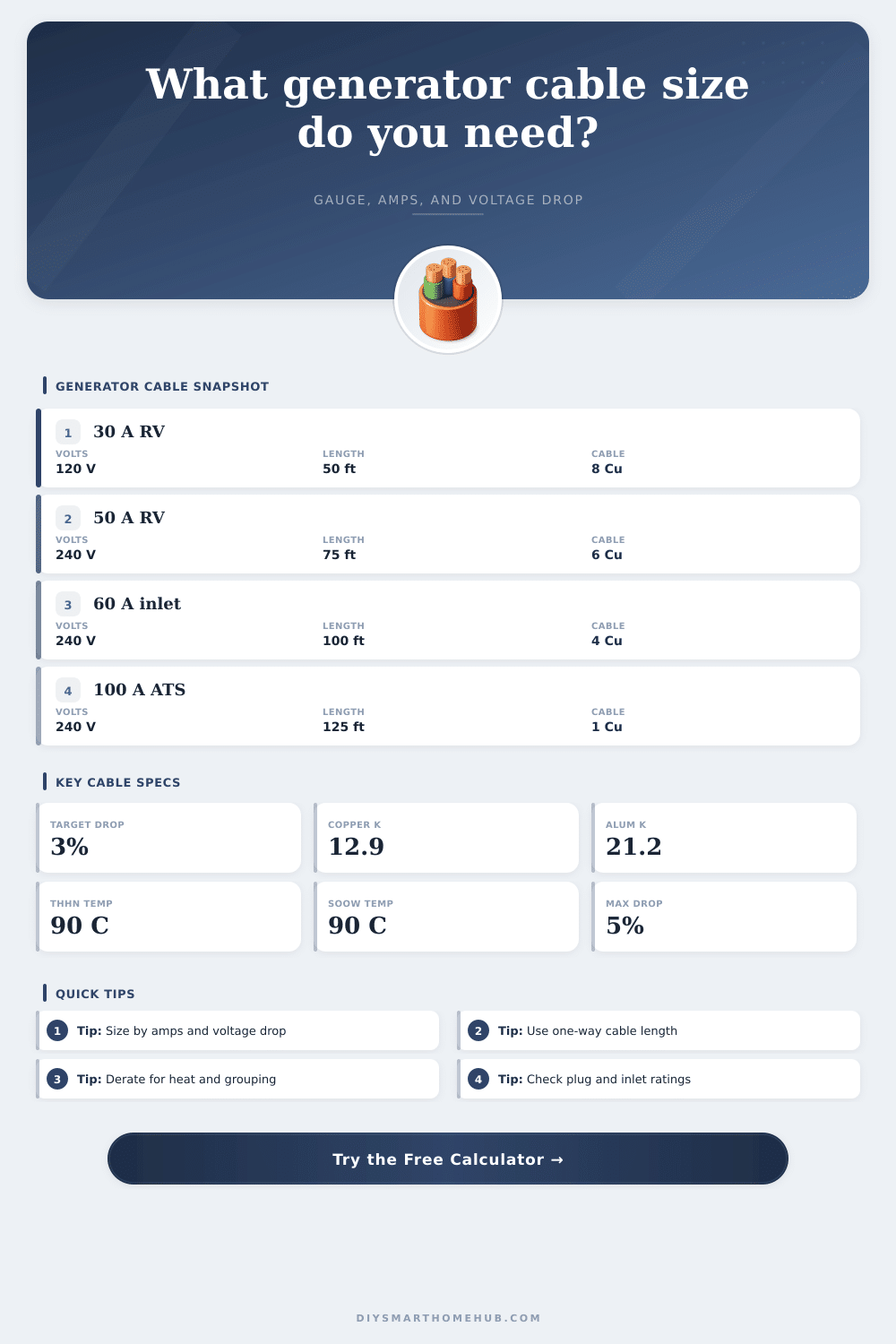
| Portable fridge and lights | 20 A at 120 V | 50 ft / 15 m | #10 copper |
| 30 A RV generator cord | 30 A at 120 V | 75 ft / 23 m | #8 copper |
| 50 A home generator inlet | 50 A at 240 V | 75 ft / 23 m | #6 copper |
| 60 A detached garage feeder | 60 A at 240 V | 125 ft / 38 m | #3 to #1 copper |
| 100 A standby generator | 100 A at 240 V | 125 ft / 38 m | 1/0 copper or larger |
| 150 A service-rated standby | 150 A at 240 V | 100 ft / 30 m | 3/0 copper or larger |
| Condition | Factor | Example | Calculator effect |
|---|---|---|---|
| 35 C ambient | 0.94 | Warm garage or sunlit wall | Reduces usable ampacity by 6 percent |
| 40 C ambient | 0.88 | Hot attic or outdoor cabinet | May force the next larger conductor |
| 4-6 conductors | 0.80 | Shared conduit with loaded circuits | Checks grouped-current ampacity |
| Continuous load | 125 percent | Hours-long backup operation | Raises required ampacity before sizing |
Voltage drop are the name given to the phenomonon that occurs when electricity travel through a conductor. When voltage drop occurs, it is because the electricity encounter resistance as it moves through a wire. Some of the electricitys energy are lost as heat due to this resistance, and the loss of voltage reduce the electricity that reaches the appliance.
Using a wire that is too thin for the distance that the electricity must travel will result in a more significant drop in the voltage that reaches the appliances. Appliances may not function correct if the voltage drops significantally, and the appliances may experience strain or the lights in the buildings may flicker. Therefore, when choosing the wire to be used for the appliances, you must consider the length of the cable run and the thickness of the wire.
What Is Voltage Drop and How to Choose the Right Wire
Many people consider the amp rating of a power plug the only measurement that must be consider when purchasing a cable. However, the amp rating indicate the plugs capacity rather than the distance of the cable run. The cable may be rated for a specific amount of amp over a short distance but not be able to handle that same amount of amps over a long distance.
In this case, the resistance in the long distance cable will become significant. A cable calculator can help determine the best cable for the distance of the wire run and the electrical load. The material for the conductor can be either copper or aluminum.
Copper is highly conductive and used for most portable cord. Aluminum is lighter and less expensive than copper but have higher resistance. The higher the resistance, the larger diameter of the wire must be to move the same amount of electricity from point A to point B.
The environment where the electrical cable is installed will affect the current the cable can carry.
Derating refer to the effect of heat on the insulation of the cable. If the electrical cable runs through a hot attic or too many wire are bundled together in one location, the heat will affect the ability of the wire to carry the current. The wire will not be able to carry as much current as it should be able to because the heat will affect the wires safe current capacity.
You must consider the ambient temperature and number of conductors in the environment where the wire will be installed to ensure that the heat will not affect the wire. One last factor to consider when selecting the conductor is whether the electrical load will be a continuous load. A continuous load is an electrical load that will be on for three hours or more.
The wire will become warm while the load is on for such a long time. In this situation, the cable should be sized to carry 125 percent of the electrical load. Providing a safety buffer by sizing the system for 125 percent of the load will ensure that the cable does not run the electrical system at the limit of the cables current carrying capacity.
The target voltage drop will depend on the type of equipment the power will be delivered to. For example, a five percent drop in voltage may be sufficient for lights or workshop machine but may not be enough for electronics that are very sensitive to voltage drops. The voltage may drop too low for the electronics to function correct, causing the motor to overheat due to insufficient voltage.
Sensitive electronics will experience fewer problem if the voltage drop is limited to a smaller percentage. The cost of the conductor material must also be consider when purchasing the cable. Using a very large diameter wire will ensure that the voltage drop will not occur, but very large diameter wires are more expensive and more difficult to move to the appliances.
Using a cable that is thin enough to be easy to move to the appliances and thick enough to remain thermally safe and electrically efficient is the goal. You should verify the wire gauge to ensure that the electricity from the power source reaches the home without too much voltage drop. You should of checked the gauge first.