☀️ Solar Heat Load Calculator
Calculate solar heat gain through windows, walls & roofs — size your cooling system accurately
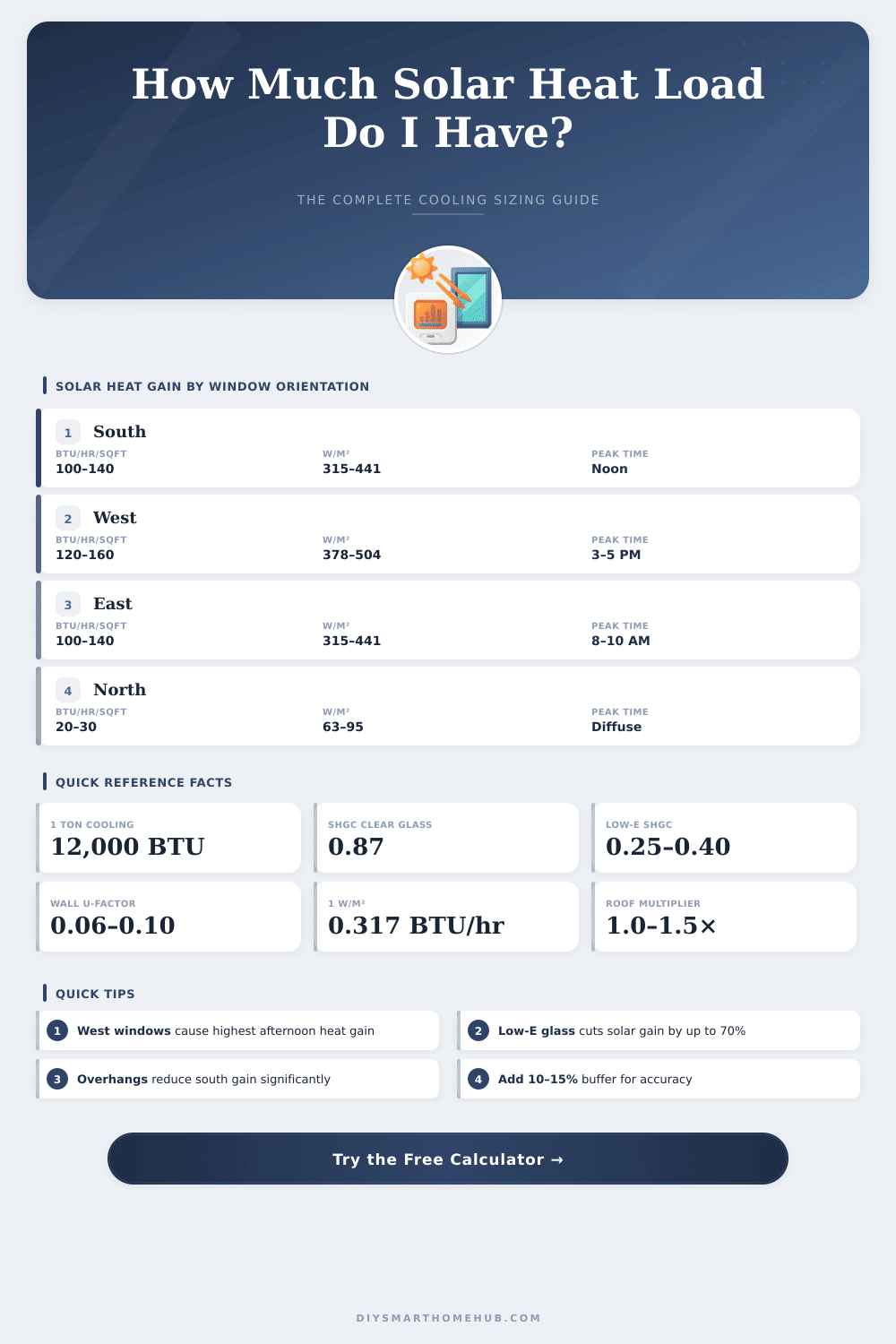
| Orientation | Peak BTU/hr/sq ft | Peak W/m² | Peak Time | Notes |
|---|---|---|---|---|
| South | 100–140 | 315–441 | 11 AM – 1 PM | High winter, moderate summer |
| West | 120–160 | 378–504 | 3 PM – 5 PM | Hottest afternoon loads |
| East | 100–140 | 315–441 | 8 AM – 10 AM | Morning gain, cools by noon |
| North | 20–30 | 63–95 | Diffuse all day | Lowest solar gain |
| Mixed | 80–120 | 252–378 | All day | Average of all orientations |
| Horizontal (Roof) | 200–280 | 630–882 | 10 AM – 2 PM | Highest total radiation |
| Wall Type | U-Factor (BTU/hr/ft²/°F) | R-Value | BTU/hr per 100 sq ft at ΔT 20°F |
|---|---|---|---|
| Wood Frame R-11 | 0.10 | R-11 | 200 |
| Wood Frame R-19 | 0.06 | R-19 | 120 |
| Masonry Uninsulated | 0.35 | R-3 | 700 |
| Masonry + Insulation | 0.12 | R-8 | 240 |
| SIP Panel R-24 | 0.04 | R-24 | 80 |
| Metal Building | 0.10 | R-10 | 200 |
| Room Size | Area (sq ft) | Est. Total BTU/hr | Cooling Tons | kW Equivalent |
|---|---|---|---|---|
| Small Bedroom | 120 | 4,000–6,000 | 0.33–0.50 | 1.2–1.8 |
| Standard Bedroom | 168 | 6,000–8,000 | 0.50–0.67 | 1.8–2.3 |
| Living Room | 300 | 9,000–14,000 | 0.75–1.17 | 2.6–4.1 |
| Open Plan | 600 | 18,000–24,000 | 1.50–2.00 | 5.3–7.0 |
| Small Office | 180 | 6,000–9,000 | 0.50–0.75 | 1.8–2.6 |
| Commercial Suite | 1200 | 36,000–48,000 | 3.00–4.00 | 10.5–14.1 |
Solar Heat Load helps estimate how much heat energy the sun adds to a space or anything. When sun rays reach a surface, the object absorbs the visible light together with the short-wave parts of the radiation. Later the surface heats up and sends this energy back by means of longer waves.
Here is the main process of solar heating.
How Sunlight Adds Heat to Buildings and Devices
Looking at the Solar Heat Load by its parts, we find three main parts. Infrared rays form around 53% of the whole during visible light involves almost 44%, and UV rays add only less than 3%. The point is this: blocking both infrared and visible parts truly helps to keep a roof cold and lower costs for energy.
When solar radiation reaches a surface, it turns itself into heat.
The coefficient of Solar Heat Load, or SHGC. Shows how much sun heat indeed passes through a surface. That can concern a window, wall, roof or simply any material that you handle.
Interesting fact: this radiant heat is useful in cold seasons, because it reduces the need for heating. In warm regions or summer months on the otehr hand, the same Solar Heat Load forces cooling systems to work more than needed.
During calculation of cooling loads for a building, the Solar Heat Load through glass matters a lot. The cooling load of the outer walls can reach around 41,000 BTU each hour. Add now the Solar Heat Load only of south windows with eight panes?
It adds another 29,000 BTU each hour. That does make major extra heat to control.
The solar cooling load depends on the amount of sun radiation that passes through glass, and on how the room surfaces and furniture absorb and spread that radiant energy. To estimate the sun load factor for each square foot of glazing, you kneed a bit complex math that starts with the passing of light through glass and considers shading and local clouds. Everything else in the space (lights), office items, machines, in the end becomes heat that one measures in BTU.
Solar heating also affects devices and there surroundings, because it is one of several factors of the whole cooling load. In addition, the internal heat of the device itself adds even more extra heat in the area. Electrical panels in direct sunshine absorb extra thermal energy, which grows the total Solar Heat Load.
The sun radiation that reaches the panel stays the same, whether the electrical circuit runs or not.
Solar protective window film can strongly lower the buildup of sun heat on glass surfaces. Big glass areas in cars or buildings commonly are the main causes of heat gain and cost. Notable: more solar panels on a roof canmake the internal warming worse on sunny days, so remember that during planning of installations.