❄️ HVAC Heat Load Calculator
Calculate the exact BTU capacity your space needs for efficient heating & cooling
100–150 sq ft
250–350 sq ft
500–700 sq ft
1,200–1,500 sq ft
1,600–2,000 sq ft
2,000–2,500 sq ft
2,500–3,000 sq ft
for AC sizing
| Climate Zone | Cooling BTU/sq ft | Heating BTU/sq ft | Examples | ASHRAE Zone |
|---|---|---|---|---|
| Mild | 17 BTU | 25 BTU | San Diego, Miami (mild) | Zone 1–2 |
| Moderate | 20 BTU | 35 BTU | Atlanta, Dallas, Denver | Zone 3–4 |
| Hot & Humid | 24 BTU | 30 BTU | Houston, New Orleans | Zone 1–2A |
| Cold | 18 BTU | 45 BTU | Chicago, Minneapolis | Zone 5–6 |
| Very Cold | 16 BTU | 55 BTU | Alaska, Canada, ND | Zone 7+ |
| Factor | Condition | BTU Adjustment | Notes |
|---|---|---|---|
| Ceiling Height | Under 8 ft | –5% | Less volume to condition |
| Ceiling Height | 9–10 ft | +10% | Standard adjustment |
| Ceiling Height | Over 10 ft | +20% | Vaulted/cathedral ceilings |
| Insulation | Poor | +25% | Pre-1980 construction |
| Insulation | Good | –10% | Modern energy codes |
| Insulation | Excellent | –20% | Passive house standard |
| Windows | High exposure | +15% | Large south-facing glass |
| Windows | Very High | +25% | Floor-to-ceiling glazing |
| Sun Exposure | Mostly Sunny | +10% | South/west facing |
| Sun Exposure | Mostly Shaded | –10% | Tree cover or north-facing |
| Occupants | Per person | +400 BTU | Human body heat output |
| AC Size | BTU/hr | Watts (Cooling) | Typical Coverage | Metric (kW) |
|---|---|---|---|---|
| 0.5 Ton | 6,000 BTU | ~500W | 100–200 sq ft | 1.76 kW |
| 1 Ton | 12,000 BTU | ~1,000W | 350–500 sq ft | 3.52 kW |
| 1.5 Ton | 18,000 BTU | ~1,500W | 500–700 sq ft | 5.28 kW |
| 2 Ton | 24,000 BTU | ~2,000W | 700–1,000 sq ft | 7.03 kW |
| 2.5 Ton | 30,000 BTU | ~2,500W | 1,000–1,300 sq ft | 8.79 kW |
| 3 Ton | 36,000 BTU | ~3,000W | 1,200–1,600 sq ft | 10.55 kW |
| 3.5 Ton | 42,000 BTU | ~3,500W | 1,500–1,900 sq ft | 12.31 kW |
| 4 Ton | 48,000 BTU | ~4,000W | 1,800–2,200 sq ft | 14.07 kW |
| 5 Ton | 60,000 BTU | ~5,000W | 2,200–2,800 sq ft | 17.58 kW |
| Furnace Output | BTU/hr | Home Size (Moderate) | Home Size (Cold) | Metric (kW) |
|---|---|---|---|---|
| Small | 40,000 BTU | Up to 1,000 sq ft | Up to 700 sq ft | 11.7 kW |
| Medium-Small | 60,000 BTU | 1,000–1,500 sq ft | 700–1,100 sq ft | 17.6 kW |
| Medium | 80,000 BTU | 1,500–2,000 sq ft | 1,100–1,450 sq ft | 23.4 kW |
| Medium-Large | 100,000 BTU | 2,000–2,500 sq ft | 1,450–1,800 sq ft | 29.3 kW |
| Large | 120,000 BTU | 2,500–3,000 sq ft | 1,800–2,200 sq ft | 35.2 kW |
The heat load in hvac system is based mainly on how many heat or cold one must add to building to keep the inside comfortable for folks. The climate plays big role here. If you deal with rough conditions, burning summers or harsh cold, then your hvac system must work more than usual to keep this ideal level inside.
Think of the heat load as the whole amount of heat or cold that one needs to reach the wanted temperature inside the house.
How Much Heating or Cooling Your Home Needs
The heat load sets the amount of warm energy that must enter a room to bring back pleasant temperatures. Study of heat load helps to exactly guess how much heating and cooling power your home needs to stay cool during warm days outside and warm during cold times. That study is key because it points how big an hvac system you truly need, instead of simply guessing.
The process of counting heat load finds the real amount of heating or cooling energy that a building needs to be comfortable during the whole year. This rating forms the base for choosing the right gear and planning a system that works well. If one is wrong about all those spots, an oversized system cools too quickly without quite removing humidity, what leaves you with wet inside air during the summer.
There are fast online tools that give rough guesses about heating and cooling needs based on basic data of your home. The method of square feet is one of the most used (it looks at the insulating quality), the area of windows and other factors. Many of those tools use something like 72 degrees as a guide for comfort.
For real accuracy, on the other hand, hvac specialists must do manual counting by means of the right software. This becomes complex soon. They measure the square areas of windows and doors, the type of walls, stuff on the roof, depth of attic; everything entered into the count of how much heat your home wins or loses.
Here is the problem: different specialists, looking at the same house, sometimes come to very different results. One homeowner, searching for heat pumps, received advice all different, from 2-ton systems to 5-ton units from various companies.
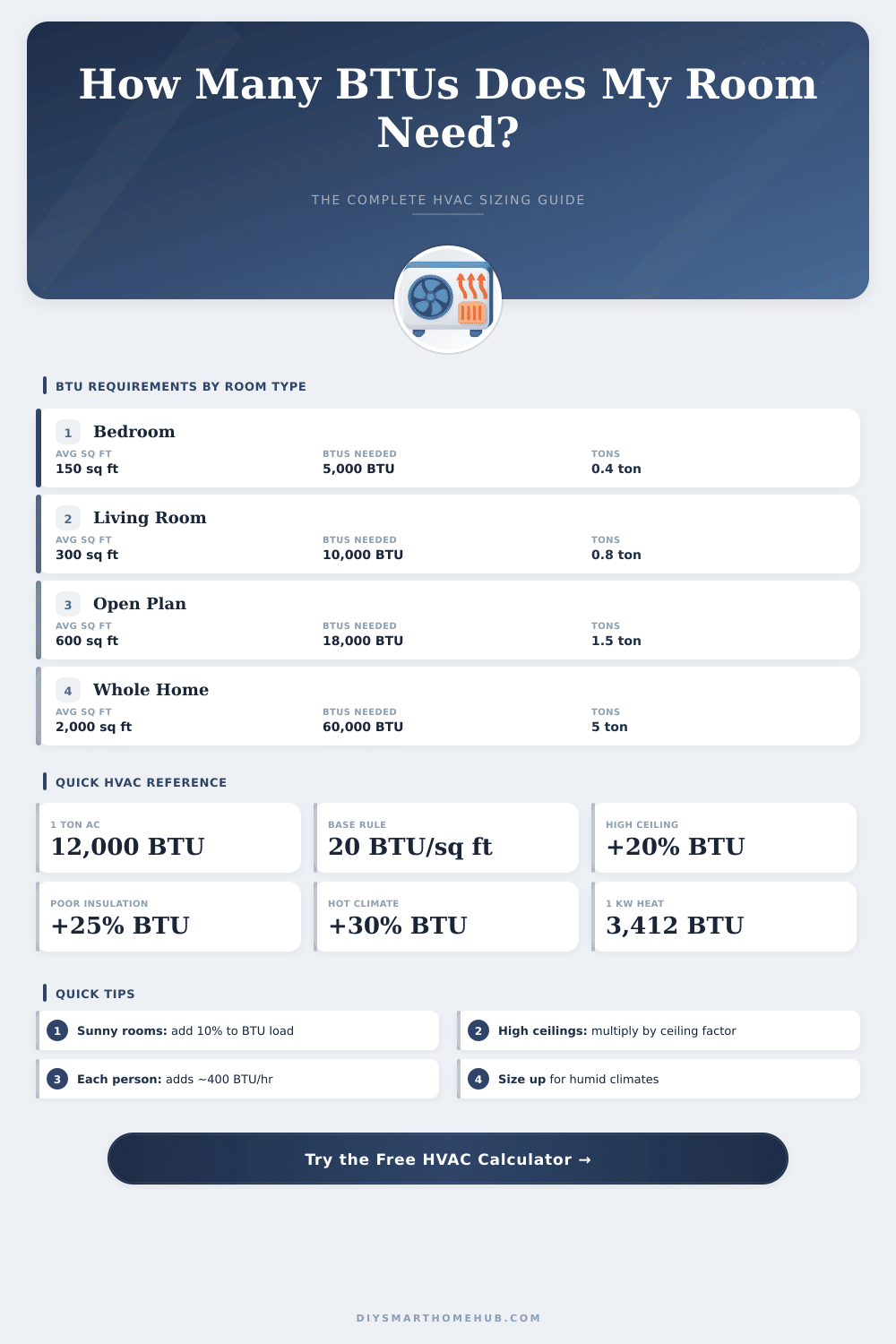
The capacity of an hvac system measures in BTUs, though specialists commonly use tons as a shorthand, one ton matches 12,000 BTUs. Sometimes the counting offers to replace your old device with something half more small, what seems risky at first sight. A professional study of heat load usually costs around 300 dollars.
Instead of simply buying a portable hvac unit, it is good to count heat load to make sure that you choose the right size. The counting itself is based on a simple equation: Q matches m times Cp times the difference of temperatures. Precise figures help tofind the right system for your room.