Curtain Fabric Width Calculator
Estimate total curtain fabric width from window width, rod extension, returns, overlap, panel count, fullness ratio, fabric width, seam allowances, pleat style, and shrinkage.
📌Curtain Width Presets
📐Window, Fullness, Fabric, And Sewing Inputs
Curtain Fabric Width Results
Calculated curtain width summary.
🧵Fabric And Pleat Spec Grid
📊Reference Tables
| Pleat style | Typical fullness | Pleat spacing guide | Best width use |
|---|---|---|---|
| Flat panel | 1.0x to 1.3x | No pleat count | Minimal side panels or stationary decor. |
| Grommet top | 1.6x to 2.0x | 6 to 8 in waves | Casual curtains that stack in regular folds. |
| Pinch pleat | 2.0x to 2.5x | 4 to 6 in spaces | Tailored pairs with rings, hooks, or traverse rods. |
| Ripplefold | 2.2x to 2.8x | Snap tape spacing | Ceiling or wall tracks with even waves. |
| Fabric width | Approx usable width | Common fabric | Planning note |
|---|---|---|---|
| 44 to 45 in | 42 to 44 in | Quilting cotton, muslin | Often needs more joined widths for wide windows. |
| 54 in | 52 to 53 in | Linen, cotton, blackout | Common for home drapery panels. |
| 60 in | 58 to 59 in | Canvas, wide decorator cloth | Can reduce joins on medium windows. |
| 108 to 118 in | 106 to 116 in | Wide sheers, railroaded fabric | Useful for sheers and tall continuous panels. |
| Window plan | Coverage width | Usual panels | Good fullness |
|---|---|---|---|
| Small bedroom window | 52 to 72 in | 2 panels | 1.8x to 2.25x depending on fabric. |
| Living room window | 84 to 120 in | 2 panels | 2.0x to 2.5x for a balanced look. |
| Patio door | 96 to 132 in | 2 to 4 panels | 1.8x to 2.2x when fabric is heavy. |
| Bay or wide wall | 120 in and wider | 3 to 6 panels | Use panel count to control join placement. |
| Allowance item | Typical value | Applied before fullness? | Calculator treatment |
|---|---|---|---|
| Rod extension | 4 to 10 in each side | Yes | Added to coverage before fullness. |
| Returns | 3 to 6 in each side | Yes | Added to coverage before fullness. |
| Center overlap | 3 to 5 in | Yes | Added once to split-panel coverage. |
| Side hems and joins | 0.5 to 2 in | No | Added as sewing allowances after panel count. |
💡Fabric Width Tips
When you buy curtain fabric, it’s typically an impulsive decision: You spot a texture in a catalog that you like. You picture it hanging over your window, then you walk up to the checkout counter. Before you leave with your new fabric, however, there’s one thing you should of think about: the math of fullness.
Here’s why: Fabric need more width than the size of your window. Cutting your fabric to fit the window exactly will leave it flat making it look cheap and unfinished. What you want are soft folds that give your room the feeling of being finished. To get those, you’ll need extra fabric.
How to Measure Curtain Fabric
That means you don’t have to guess what size to order; the calculator above do all the math for you. It even factors in shrinkage and rod extensions, so no mistakes!
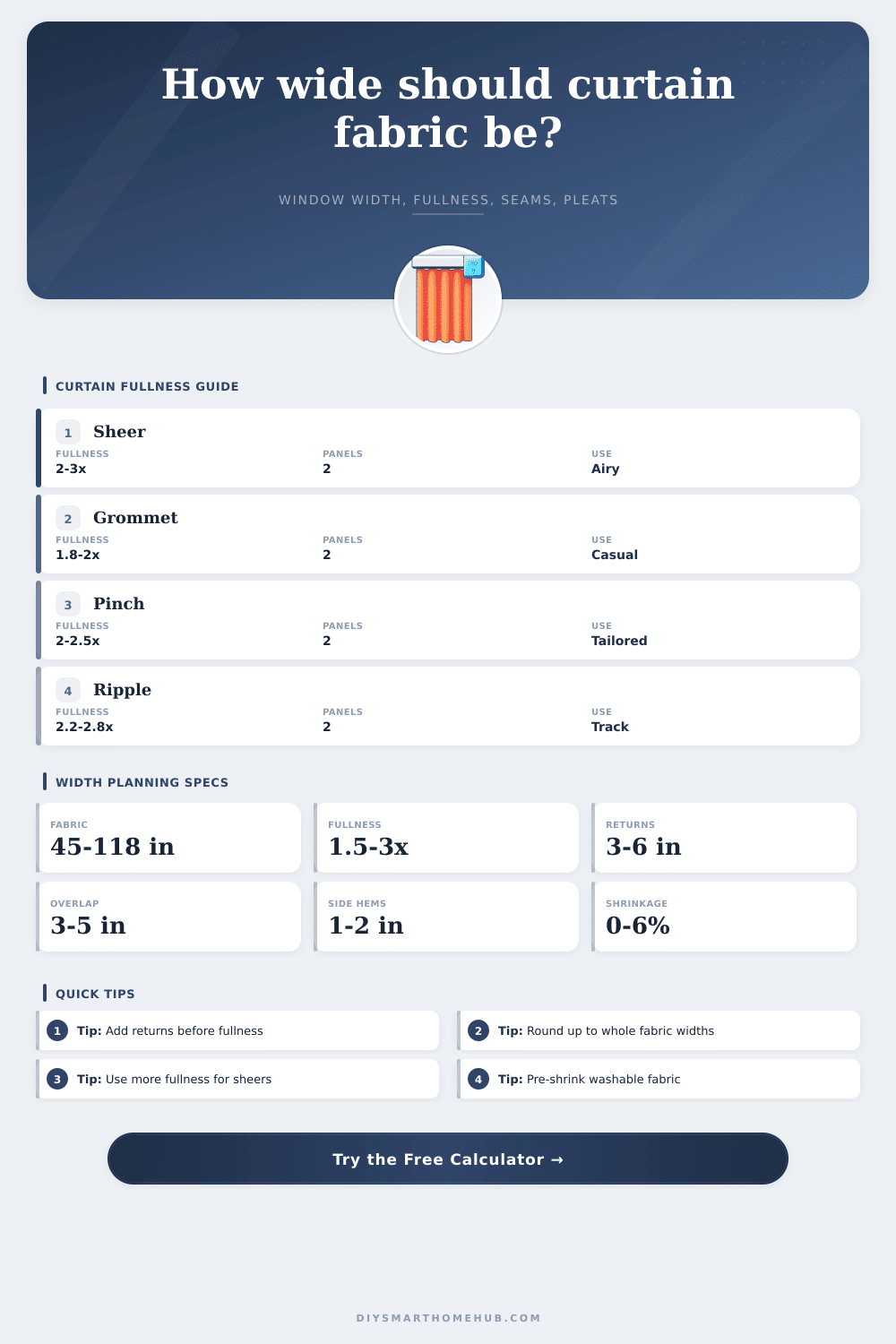
The other thing that’s really important in the equation is fullness: the width of the fabric versus how wide it will be once the window is finished. In this case, Fullness = Flat Fabric Width / Finished Window Coverage. So if you have 1.5, you have half again as much fabric than needed for the window. That’ll give you a slightly gathered look. This works well with a heavy blackout liner because too many folds would of made it hard to handle. But on light cottons or sheers, it look sparse.
With sheer curtains, you don’t want weight, but you do need more material so the fabric look thick. So something like 2.5 to 3 times fullness for an airy drape. And you can slide this around in the calculator depending on what fabric you’ve got. Since certain types of folds, ripplefolds or even pinch pleats; need just the right amount of slack in order to fold into themselves properly, the tool give you a few suggested ratios for those styles.
Speaking of returns: One other thing to know about a customized appearance: Return refers to the portion of fabric that wraps from the front of the curtain rod back against the wall. It’s subtle, but it makes a huge difference between looking like a pro or buying something off the rack. Curtains without return show a gap when pulled open, and lie flat on the window glass. For most standard installs, roughly 3-4″ on each side is necessary.
Because the order of things really does matter here, the calculator first figures out how many total panels are required (with fullness), then adds that before calculating the fullness. Adding returns afterward, if you do so AFTER multiplying times fullness, will mean your end result panels is far too wide. This wastes fabric and creates a huge pile at the sides when the curtains are pulled. Your budget plans can suffer as well.
Did you know that natural fibers (such as cotton and linen) will naturaly relax during washing? Depending on how hard they are washed, they can shrinks between three and five percent with a regular wash cycle. Although that sounds minimal, it’s those hems on the sides where those inches originate. Now suddenly your carefully calculated amount of overlap isn’t enough to meet in the middle and you have a gaping hole of exposed window every time you draw the curtains closed. For this reason there is a field for percent shrinkage in the tool, you should enter what you think the fabric will shrink so you account for it ahead of time. Better to purchase a bit more up front than to face a hole in your draperies later!
How many pieces will you need? Depending on the bolt width of your fabric (and the number of joins) you’ll need more or fewer piece. Most decorative fabrics is 54 inches wide (standard widths). So if you want your completed panel to exceed this dimension (accounting for the seams and hem allowance), then you’ll need to piece two lengths. Every time you sew a join, the seam allowance mean there is less width available to use. To keep things nice and simple, the calculator rounds up to full fabric widths. That way you can make all your panels from one length of fabric (cutting out whatever remains as waste).
This doesn’t mean that we don’t cover the window… But rather we pay attention to the shape of the textile industry! Once you know how these factors combine, measurement isn’t hard work… It becomes part of investing in precision.