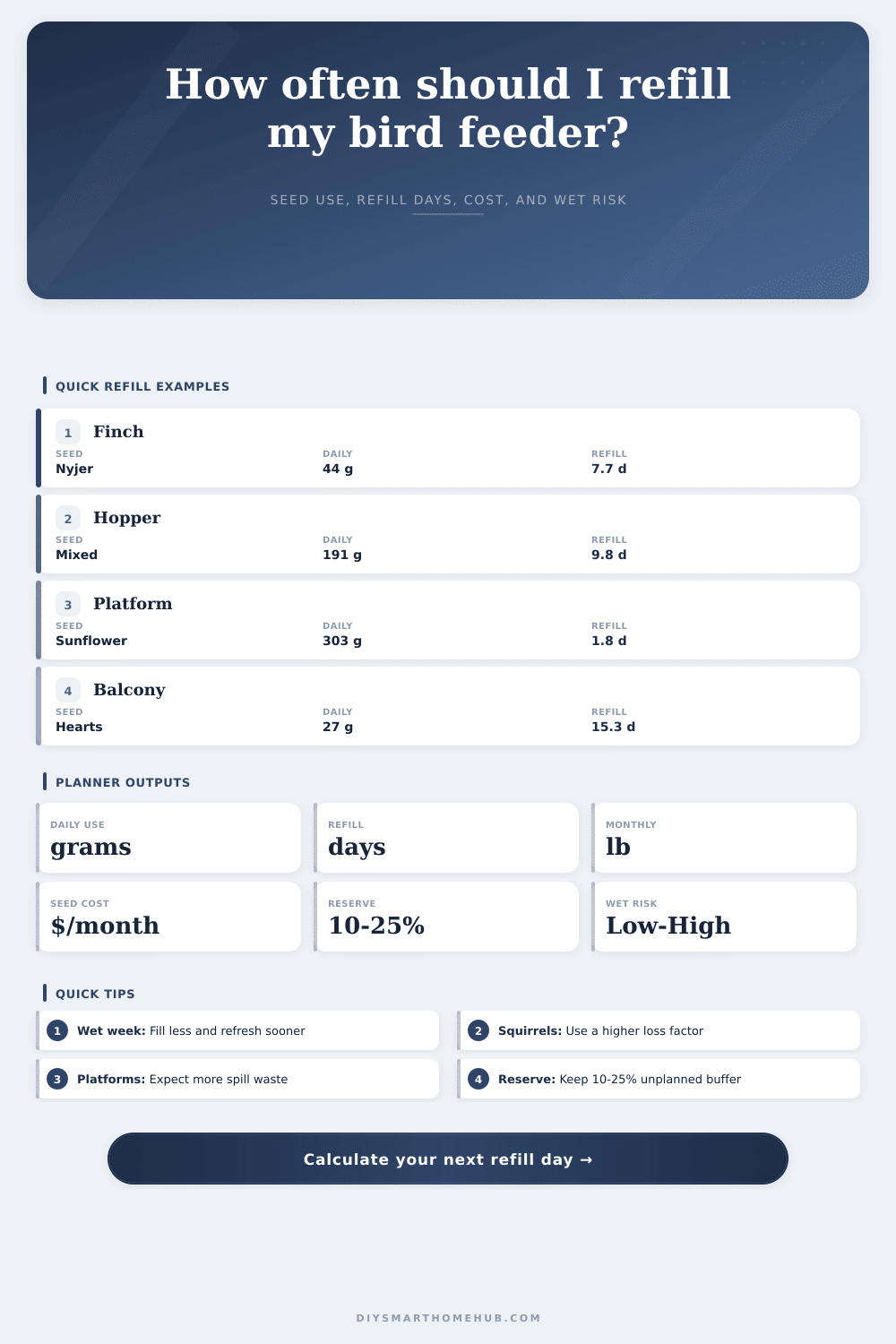
Bird Feeder Refill Interval Calculator
Plan refill timing from feeder capacity, seed type, bird visits, spill pressure, squirrels or large birds, rain, and reserve margin.
Presets
Calculator Inputs
Results
capacity days = capacity grams / daily seed use
reserve refill interval = capacity days * (1 - reserve %)
monthly seed lb = daily grams * 30 / 453.592
cost/month = monthly lb * price/lb
Breakdown
Comparison Grid
| Preset | Seed | Setup | Daily g | Refill | Monthly lb | Cost | Risk |
|---|
Seed Type Density, Cost, and Use
Typical Feeder Capacities
| Feeder style | Common capacity | Best planning note |
|---|---|---|
| Small finch tube | 250-450 g | Small ports slow use, but nyjer can cake in rain. |
| Standard tube | 700-1200 g | Good capacity while keeping seed fresh. |
| Hopper feeder | 1400-3000 g | Large reserve; check damp seed at the bottom. |
| Platform tray | 300-900 g | High access, high spill, faster refill cycle. |
| Suet cage pair | 220-320 g | Use cake weight instead of loose seed volume. |
Bird Size Consumption Guide
| Bird traffic | Seed per visit | Visit pattern | Loss note |
|---|---|---|---|
| Finches and chickadees | 0.4-0.9 g | Many short visits | Low spill with fitted ports. |
| Sparrows and titmice | 0.8-1.8 g | Moderate repeat visits | Medium sorting and shell drop. |
| Cardinals and grosbeaks | 1.5-3.5 g | Fewer larger visits | Higher demand on open feeders. |
| Doves, jays, grackles | 3.0-8.0 g | Longer feeding bouts | Use the large-bird factor. |
Spill, Squirrel, and Large-Bird Factor Guide
| Pressure level | Suggested factor | What it means | Planning effect |
|---|---|---|---|
| Clean tube feeder | 5-10% | Small birds, fitted ports, little ground waste. | Daily use stays close to true bird demand. |
| Normal mixed yard | 15-25% | Some shelling, sorting, and occasional larger birds. | Refill interval shortens modestly. |
| Open tray or platform | 30-45% | Birds can sweep seed sideways and drop shells freely. | Capacity days can fall by a third. |
| Squirrel-heavy yard | 50-90% | Squirrels, jays, doves, or grackles remove bulk seed. | Cost and refill frequency rise quickly. |
Weather and Spoilage Guidance
| Rainy days/week | Refill interval | Risk | Action |
|---|---|---|---|
| 0-1 | Any normal interval | Low | Keep 10% reserve and clean monthly. |
| 2-3 | Over 7 days | Medium | Use a cover, smaller fills, and weekly checks. |
| 4+ | Over 5 days | High | Reduce fill volume and refresh seed sooner. |
| 6+ | Over 3 days | High | Use drainable trays and weather guards. |
The bag of sunflower seeds in checkout line didn’t feel so heavy, but now here you are on the porch hefting it again. Only it’s not looking as if there was even anything in feeder, but wait; you filled it up yesterday! It’s the classic backyard bird feeder problem. On the one hand, you crave a never-empty buffet for all those feathered friend. On the other, you don’t like spending 50 pounds of seed watching it get dragged off into woods by squirrels.
One seemingly invisible factor can make the difference between an enjoyable hobby and a money pit. And that variable? That variable is refill interval.
How to Know When to Refill Your Bird Feeder
When to restock the feeder: most of us guess. We go on what our eyes tell us. These visual clues are often unreliable, since a feeder can be half-empty but look full, or look empty when it is actualy full.
Plug your numbers in the calculator above and let it do the math. It removes the guesswork, bringing together various factor that many of us fail to consider until it’s too late. The most critical variable are the squirrel loss and spill factor. This accounts for the amount of seed that doesn’t make it into a bird’s beak, such as seed that lands on the ground, gets kicked out by jay, or gets stolen by a squirrel.
If you use a platform feeder, this number should of be high. Of all feeder types, platforms is the wild west of bird feeding. Anyone with access has access, including those who don’t pay rent. A tube feeder have small openings that keep the waste down. You’re paying for what the birds eat, not for seed that feeds the lawn.
And it considers how many birds are visiting and how heavily. In fact, that is more important than what kind of seed you purchase. This is because different visitor may have different pattern of consumption.
Do you have a lot of finches visiting? Do they make lots of quick little stops? How about two cardinals? They makes fewer visits, but each is a full-on bout of heavy eating. Finches nibble; they don’t come back for much time, but they’re persistent. Cardinals will take huge bites, but they won’t do it as often.
The calculator multiplies birds times visits times grams per visit to get real daily demand. Then it tops it with a waste factor. And there you go… The true burn rate.
Knowing the burn rate make the size of your feeder irrelevant. Sure, a giant hopper will keep going longer in terms of days but it raises the odds of spoilage. But here’s where folks err: They think if it has a big container, it means less effort on their end. Seed is organic matter. It soaks up water. In wet weather seed sitting in the bottom of a large hopper for ten days will mold before the top layer are touched.
That’s why the calculator have what we call a reserve margin setting. This tells you how often you need to top off your hopper to ensure quick turnover of seed, which keeps it fresh. It also prevents possible rot from too much moisture. If it looks like it’ll be rainy, the tool will adjust the refill recommendation so you don’t have to worry about having damp seed.
Again, it is a small thing, but it matters. Moldy seed is worse than no seed because it may taint the very seed you’re hoping will feed those birds.
The other invisible expense is price. Based off how fast it goes down in your yard, the calculator estimates its price and weight each month. High squirrel pressure? You pay a premium every month. This is illustrated with a handy reference table on the page, which compares prices across different set-ups.
Maybe the best way to save money isn’t changing seed brand but upgrading to a baffled tube feeder instead. The idea is to buy as much seed as possible compared to how much actualy gets eaten instead of being wasted.
Once you grasp this pattern, you no longer react to empty feeders; instead you plan ahead for what you need. Refill at the pace that’s biologically required, not the pace of your own visual anxiety. The birds gets consistent food. It gives peace of mind for your wallet. And nobody ever has to deal with that damn heavy bag again.