Motor Starting Current Calculator
Estimate induction motor full-load current, locked-rotor amps, starter-reduced inrush, starting kVA, and source voltage dip for smart relays, standby power, pumps, compressors, fans, and shop motors.
⚡Motor Starting Presets
🔧Motor And Source Inputs
Motor starting estimate
Calculation breakdown
📊Motor Starting Spec Grid
📘Reference Data Tables
| NEMA code | Locked-rotor kVA per hp | Typical small-motor use | Calculator note |
|---|
| Starting method | Line current basis | Starting torque | Best use | Smart-control note | Main limitation |
|---|
| Common motor load | Typical size | Common voltage | Typical code | Planning concern |
|---|---|---|---|---|
| Garage door opener | 1/2 hp | 120 V single phase | J-L | Smart relay contacts must tolerate motor inrush, not only running watts. |
| Sump pump | 1/3 to 1/2 hp | 120 V single phase | K-M | Generator and UPS sizing should allow wet-start cycling. |
| Deep well pump | 3/4 to 1.5 hp | 240 V single phase | J-L | Long branch circuits can add voltage drop during locked rotor. |
| Pool pump motor | 1 to 2 hp | 240 V single phase | H-K | Automation relays should be motor-rated or contactor-driven. |
| Shop compressor | 3 to 5 hp | 240 V single phase | G-J | Hard starts can exceed inverter or small generator surge ratings. |
| Example setup | DOL start kVA | Source kVA | Impedance | Estimated dip | Result flag |
|---|
✅Actionable Planning Tips
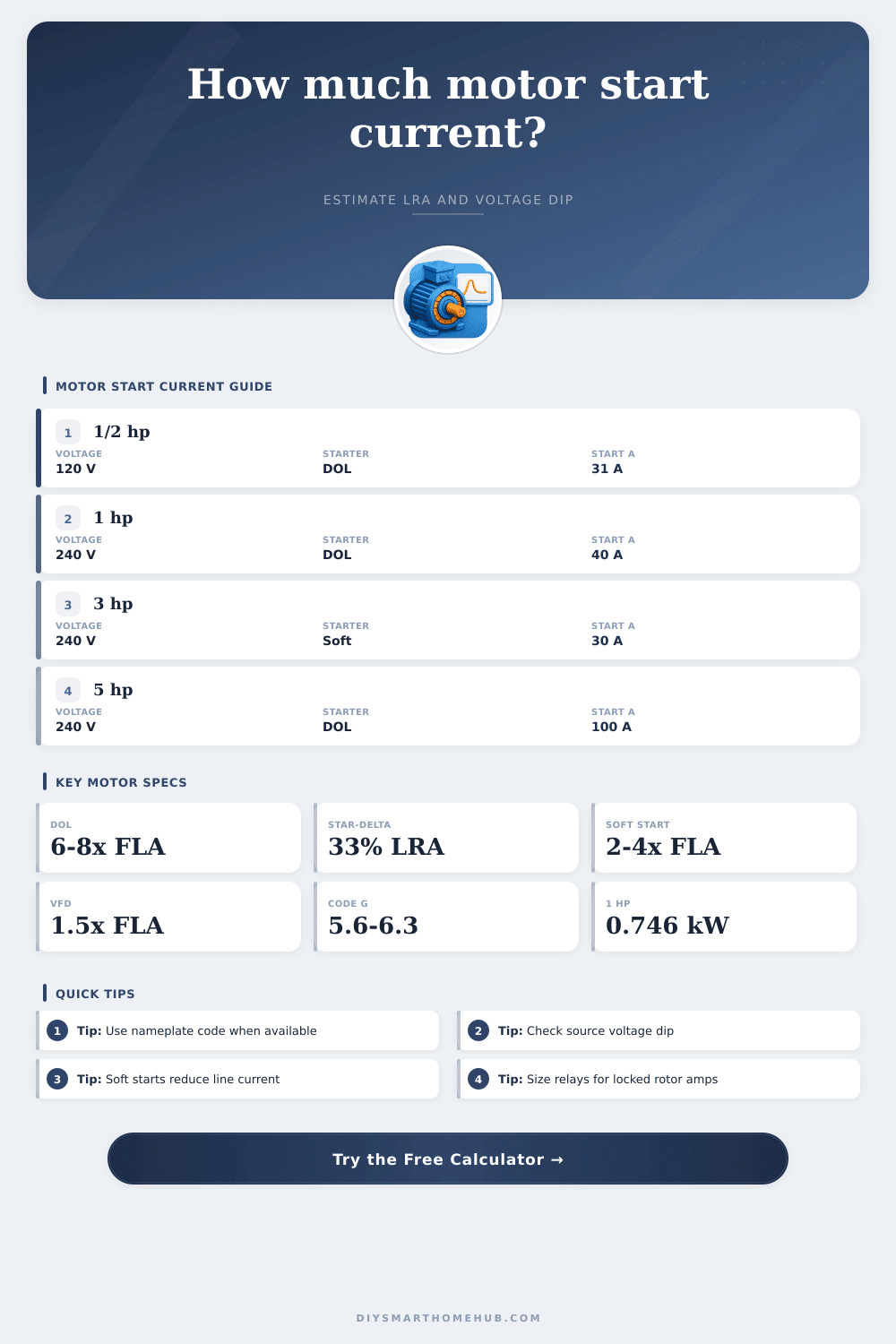
When designing an electrical system, don’t assume a normal operating load. Calculate it for the amount of current required when the motor first starts. Starting amps can be 5-10x more than a constant run load. That’s why the breaker trip or lights dim. This is called locked rotor current.
To avoid all the guessing work, use a calculator which takes real world information off the name plate. Enter the volts and watts (or horsepower) for the motor and it set the baseline of running current. Next check NEMA code letter on the motor tag. That letter tell you how much apparent power the motor requires in its starting mode. High letters such as K or M mean the motor will pull substantially more current different than a lower-letter motor, such as A or B. The calculator translate those letter codes into kilo Volt Amps and amps. Now you know precisely how much the breakers needs to handle.
How to Handle Motor Starting Current
Now that we have the locked rotor number, what do you want the motor to do when it starts? There are three choices: Direct Online Starting applies full voltage right away, but this only realy works for smaller loads on dedicated short circuits. On longer wires running larger motors this approach will result in voltage drop and the motor stall. Soft starter and star-delta configurations both eases into the start by limiting the voltage at startup. The drawback is always torque. The more you slow down the start, the harder it is for the motor to get going and it will overheat. There is no free lunch here.
You need to balance the requirements of machine against the electrical safety of your house. The other key variable is source capability. If you have a big 5 hp motor, a large transformer or beefy generator will barely flinch. However, that same motor could be too great a surge (above its peak rating) for a little residential inverter generator. Even though it can handle the motors continuous load (below). Why? Because the calculator calculate voltage dip, based off available kVA and source impedance. The predicted dip might be to steep. Result: either equipment damage or nuisance tripping.
Many DIY installs stumble at this step, where people purchase generators rated only for running watts yet ignore their starting kVA. Recurring starts aggravate this issue. Cycling a dust collector every few minutes create heat at its relays, contactors and windings. Motors creates an inrush that burns out relays rated only for resistive loads. Use parts capable of handling the current impulse. The page has reference tables for matching common load with expected draws and how they should of been protected from them.
Respect the physics: You have to know what you’re doing when it comes to starting current. That big-looking wire may be fine for passing amps, but will melt in face of heat from frequent hard starts. The tool spits out numbers that can show whether your infrastructure can withstand the shock. Listen to the estimates; they shouldn’t be taken lightly. Dimming lights are warning signs. A tripped breaker is usually the last resort before something fails permanent. Plan for the initial surge, not just the steadying hum.