Robot Vacuum Filter Replacement Interval Calculator
Estimate filter replacement days from rated hours or rated cycles, daily runtime, floor mix, dust, pets, pollen, wash care, used life, and current clogging.
Quick presetsreal home loads
Filter and robot inputsrated basis
Replacement resultslive estimate
Filter load factorsreference grid
Typical robot vacuum filter ratingsplanning values
| Filter or robot app rating | Common planning range | Best use in calculator | What shortens it |
|---|---|---|---|
| Disposable HEPA-style exhaust filter | 50 to 120 fan hours | Use rated hours when the app tracks filter hours. | Fine dust, pet dander, carpet fibers, and clog warnings. |
| Washable robot vacuum filter | 80 to 200 fan hours | Use rated hours plus the wash interval fields. | Late rinsing, drying incompletely, damp debris, and high suction. |
| Cycle-count replacement guidance | 30 to 120 cleaning cycles | Use rated cycles when the manual says replace after runs. | Long cycles, turbo mode, and carpet-heavy maps. |
| Auto-empty dock pre-screen | Tap every 7 to 30 days | Use bin care and clog fields for airflow restriction. | Lint packed on the screen or a bag nearing full. |
Common interval examplesnormal rated filter
| Scenario | Runtime pattern | Load profile | Expected replacement interval |
|---|---|---|---|
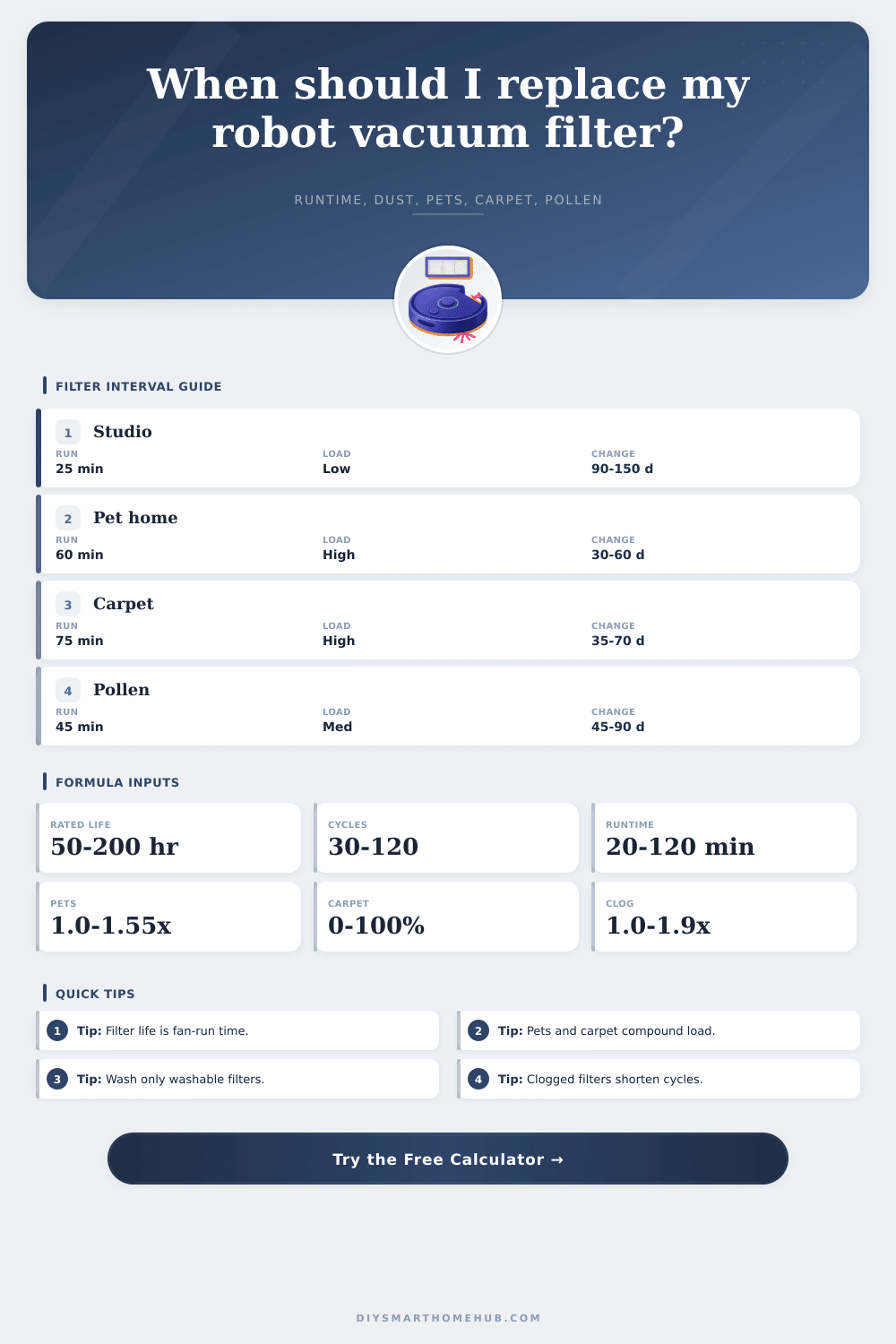
| Hard-floor studio | 25 minutes daily | Low dust, no pets, quiet mode | About 90 to 150 days for a 70-hour filter. |
| Mixed apartment | 45 to 60 minutes daily | Normal dust, some rugs, balanced mode | About 55 to 100 days for a 100-hour filter. |
| Two-pet home | 60 to 75 minutes daily | Hair, dander, higher bin load | About 30 to 60 days for a 100-hour filter. |
| High-pollen season | 45 minutes daily | Fine allergens and frequent washable care | About 45 to 90 days, depending on clogging. |
| Carpet-heavy map | 75 to 100 minutes daily | Turbo suction, fibers, higher airflow | About 35 to 70 days for a 120-hour filter. |
Formula notesverified math
| Step | Hours basis | Cycles basis | Why it matters |
|---|---|---|---|
| Rated remaining | Rated hours minus used hours | Rated cycles minus used cycles | Prevents a new interval from ignoring existing filter age. |
| Base daily use | Runtime minutes divided by 60 times cycles per day | Cycles per day times runtime versus 60-minute reference | Longer runs consume more of the filter even when counted as one app cycle. |
| Load multiplier | Mode x dust x pets x carpet x pollen x bin x wash x clog x dampness | Same multiplier | All real-world conditions compound into equivalent rated use. |
| Interval | Remaining hours divided by adjusted daily hours | Remaining cycles divided by adjusted daily cycles | This is the replacement interval in days. |
Practical filter remindersnot brand-specific
You’re watching TV… So let the robot vac run. That sounds cool, doesn’t it? Except that filter in there’s delicate. People typicaly change theirs whenever they notice poor suction, which means you’re always running behind. But filter replacement shouldn’t of be guesswork!
Filter lifespan isn’t just about time; it also varies with how dirty the air is (not just what the air is) and what it picks up, so a computer does math for you. Just tell it when you use vacuum and what kind of home it’s cleaning. Voila: no more wondering if your new carpet or extra-hairy dogs is making you replace the filter sooner than expected.
How to Know When to Change Your Robot Vacuum Filter
The inputs are the inputs; don’t let a nice, clean floor distract you. Yes, filters can handles shiny hardwood floors, but that doesn’t mean all the fine dust won’t settle. The tool adjusts to handle both suction modes and dust load. Regardless of what your room looks like, running it in turbo mode moves more air through the same amount of filter media which wears down its lifespan at a faster rate. This is important when planning for replacement parts.
Pets make things worse, like hair wrapped around brushes and pet dander inside filtration system. A multiplier is applied to the calculator if you has shedding pets. Fine allergens will clog those HE pores quicker then coarser crumbs, which shortens the estimated time between cleanings.
With carpet, there’s a wrinkle: Carpet fibers continually shed. That fiber gets pulled deep into the intake path by high suction. A home with lots of carpet could require new air filters as frequently as once every six weeks (compared to every three months), according to the reference table. This is not because carpets themselves are naturaly dirtier. But because carpet creates debris that clog filters faster.
Damp soil or humidity around an entrance can also be an issue. Moisture causes dust to clump, which makes airflow less efficient. Clumps create extra resistance for the fan, which will age your filter faster.
For filters with washables: Regular washing is a critical part of preserving your filter’s life if it’s actualy washable! Tapping on a disposable HEPA filter does not remove anything from within. And rinsing one destroys its electrostatic charge and ability to trap particles. The tool prevents this mistake by distinguishing between care types.
For washable filters, skipping an occasional rinse leads to accumulated penalties from clogged filters. A regular wash cycle at 2 weeks stretches out filter life much more then waiting until low airflow warns you. Most people think washing are optional maintenance. Consider it essential care for what’s left in your filter.
How many cycles or rated hours have you had? That’s where real-world data helps guide your decision-making. If you’re running your robot regularly, the app counter will typically be pretty accurate; simply enter that number in. Recent renovations or seasonal events such as pollen season act as accelerators, shortening that timeline.
Don’t worry. You don’t need to turn into an engineer to get it done. Understanding what influences suction power, such as carpet coverage and whether pets is present; will help you understand when to replace parts. A filter isn’t something you just set and forget. It’s a part that responds to the activity in your home. By keeping it clean and replacing it at the right time, you keep your robot cleaning rather than re-distributing dust.
The floor gets really clean. And the hum becomes normal again.