Smart Medication Dispenser Dose Schedule Calculator
Estimate dispenser logistics from scheduled dose events, usable compartments, refill buffers, reminder timing, missed-dose buffer, and caregiver alert volume. This tool models timing and capacity only.
📌Quick dispenser presets Choose a starting point
⚙Schedule and capacity inputs logistics only
⏱Reminder and alert timing minutes after schedule
📊Schedule calculation results capacity and alert model
📋Reference specs common dispenser planning values
Capacity examples
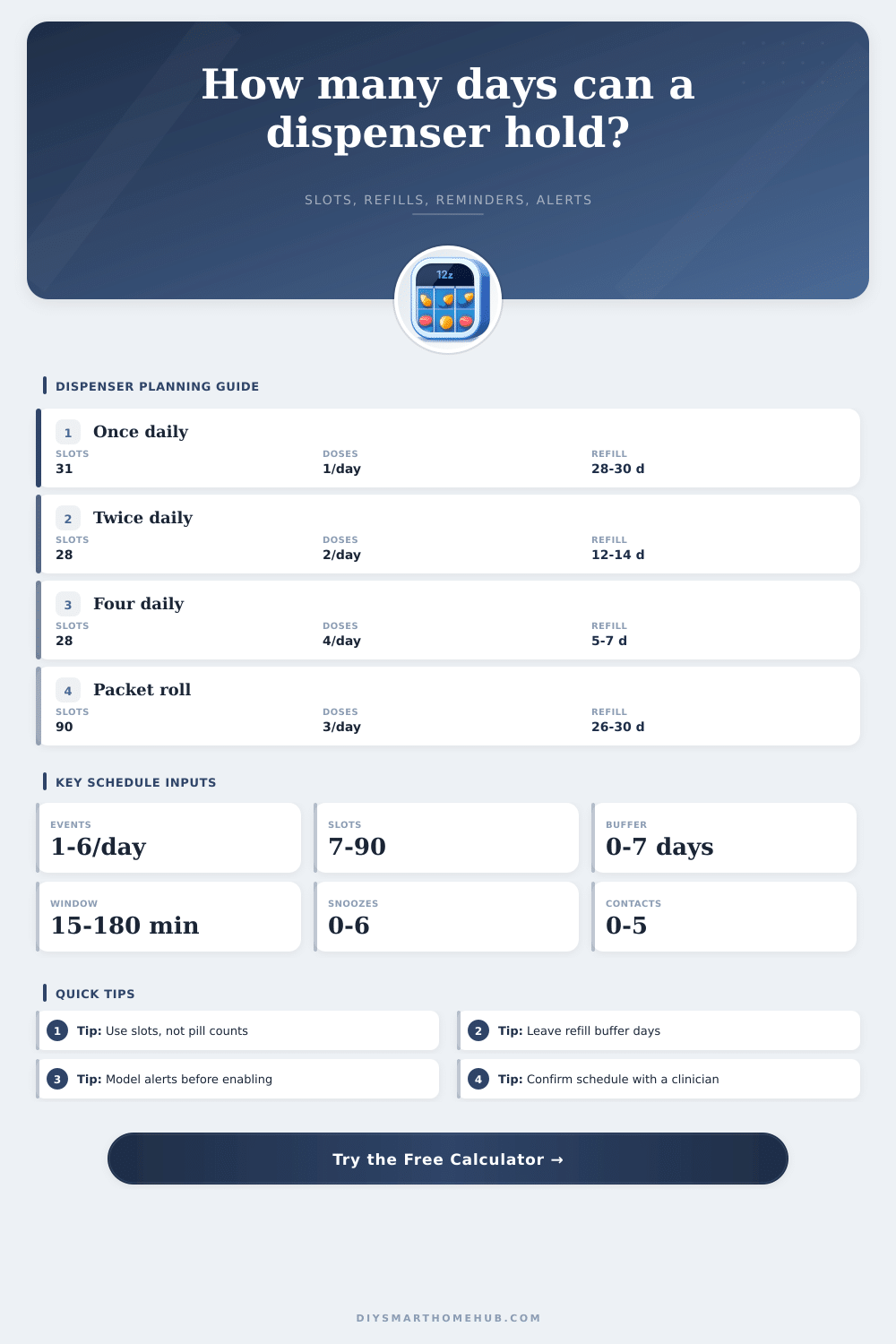
| Dispenser style | Usable slots | 1/day | 4/day |
|---|
Reminder window examples
| Window style | Lead | Late window | Missed mark |
|---|
Alert volume examples
| Contacts | Retries | Missed/week | Alerts/week |
|---|
Preset scenario summary
| Scenario | Doses/day | Capacity | Refill target |
|---|
It’s three days from the weekend when you notice that your pill dispenser is running dry. And then you’re struck by a certain mix of health anxiety and logistic anxiety. The solution? Smart dispensers. But they create there own complications.
They are no longer just about counting pills. Now, they is like a small automated warehouse inside your medicine cabinet, with strict timing windows and capacity limits. Before setting up reminders or refilling your prescription, you should of understand what those limitations are. This tool (above) lets you model them. This is not medical advice; it is just making sure there is room in the machine for all your doses.
How Smart Pill Dispensers Work
People often gets confused between compartment counts and pill counts, but there’s no distinction to the machine. It doesn’t matter whether you pop one big ol’ caplet or two little ones at breakfast; the only thing that matters is that it opened a slot. Maybe your morning pill requires two of them. Two compartments would fix that. That screws up the math! To fix this, the calculator ask how many slots you’re using per event. When you actualy use two, and don’t change that number from one, the math assumes you have twice as much space in reality… and leaves you high and dry halfway through the month.
That’s where most people mess up. They find themself standing at their kitchen table on Tuesday night, shoveling out another pile of pills to fit into a backup container.
The other side of the equation is capacity: How many doses can be stored? But here’s the thing, timing matter. Does a smart dispenser allow enough time to alert you and wait for a window to pass so it knows if a dose was missed? Set the window too tight, and now you’ll get an alert every time you’re in the shower. Set it too loose, and you won’t realize you forgot your evening meds til the next morning. The page has a reference table that lays it all out and shows how varying lead times (and late windows) move the definition of missed dose around. And it forces you to think through your actual daily rhythm instead of just trusting some defaults.
Another common source of friction are refills. Monthly refills operate on the assumption that one month equals 30 days, but there’s a huge range of total slots in any given dispenser. If your device has thirty-one slots, and you take two doses per day, reserving one slot for errors, that might only be good for twenty-eight days worth of medication. So you want some sort of buffer. Enter the refill buffer option on the calculator; you can use this to reduce your raw capacity by the number of days you’d like to keep as a buffer. That way you’ll never run out while waiting for pharmacist to process your refill order, and it gives you a safe target day for refilling. It is a small thing, but it is a big deal when you are dealing with chronic condition that do not tolerate gaps.
The silent killer of smart dispensers is alert fatigue. In other words, if it buzzes every 10 minutes and dials three relatives when you snooze two times, they won’t listen after a week. To avoid that, we model the amount of alerts you’ll send. We estimate the number of times you could’ve missed a dose or snoozed, so we know how many alerts caregivers should expects. Too many? You’re probably going to want to adjust your escalation delays or snooze limits. We don’t want constant noise, just consistent engagement.
But all of this ultimately depends on the plan, not just the technology. A smart dispenser is just a mechanical servant which requires clear directions about where, when and under what conditions it should be used. Running your own routine through a capacity model makes a black box predictable. It knows exactly when to run out, how long it last, and how loudly it’ll complain when something goes wrong. That’s what makes a complex gadget into a trustworthy part of your everyday routine… And why it keeps the consistency in, but the anxiety out.