Robot Vacuum Bin Empty Interval Calculator
Estimate how many days a robot vacuum bin or auto-empty dock can collect debris before emptying, using cleaned area, cleaning frequency, dust level, pet hair load, and usable capacity.
📌Quick bin interval presets
Use a preset as a starting point, then enter the area your robot actually cleans and the bin capacity from your model label or manual.
📏Area, debris, and capacity inputs
📊Bin empty interval results
📘Robot vacuum bin capacity grid
🧮Debris rate reference
| Dust level | Base debris rate | Typical condition | Calculator effect |
|---|---|---|---|
| Light dust | 1.5 ml per 100 sq ft per pass | Sealed bedrooms, low outdoor dust, little grit. | Longer empty interval. |
| Normal lived-in dust | 3.0 ml per 100 sq ft per pass | Daily household dust and crumbs with typical foot traffic. | Good default setting. |
| Dusty home | 5.0 ml per 100 sq ft per pass | Open windows, pollen, fireplace ash trace, busy rooms. | Shortens bin days by about 40%. |
| Heavy crumbs and grit | 7.5 ml per 100 sq ft per pass | Kitchens, mudrooms, litter scatter, sandy entryways. | Small bins may need every-run emptying. |
| Fine renovation dust | 10.0 ml per 100 sq ft per pass | Drywall or sawdust residue after cleanup. | Use conservative fill limit and check filters. |
🐾Pet hair and surface multipliers
| Input | Multiplier | Why it matters | Best use |
|---|---|---|---|
| No pets / low hair | 1.00x | Mainly dust and small particles settle into the bin. | Hard floors and low-shed homes. |
| One cat or light pet | 1.28x | Hair increases fluffy volume before the bin reaches true mass capacity. | Daily apartment cleaning. |
| One medium-shedding dog | 1.65x | Longer hair and carpet pickup reduce usable bin interval. | Mixed floors and rugs. |
| Two pets / heavy seasonal shed | 2.05x | Hair mats can trip full-bin sensors early. | Auto-empty dock planning. |
| Long hair household / multiple pets | 2.40x | Hair volume, lint, and brush roll pickup dominate the bin. | Use lower safe-fill percentage. |
| Surface profile | Multiplier | Typical debris pattern | Interval impact |
|---|---|---|---|
| Open hard floor | 0.90x | Less fiber, easier pickup, lower fluff volume. | Slightly longer interval. |
| Mixed hard floor and rugs | 1.00x | Balanced dust and fiber pickup. | Baseline estimate. |
| Low carpet mix | 1.18x | More lint and embedded dust per pass. | Shorter interval. |
| Plush carpet or dense rugs | 1.38x | High lint volume and more repeated brush pickup. | Expect frequent bin checks. |
| Entry grit, sand, or litter | 1.55x | Heavy particles collect fast in small bins. | Use lower planned interval. |
📦Auto-empty dock capacity examples
| Dock capacity | Usable at 85% | Daily debris load | Estimated dock interval |
|---|---|---|---|
| 1.5 L compact canister | 1275 ml | 25 ml/day | About 51 days before manual emptying. |
| 2.0 L bag | 1700 ml | 40 ml/day | About 43 days before manual emptying. |
| 2.5 L bag | 2125 ml | 60 ml/day | About 35 days before manual emptying. |
| 3.0 L large bag | 2550 ml | 80 ml/day | About 32 days before manual emptying. |
| Bagless dock | Varies by canister | Measure real fill line | Use capacity in milliliters for best results. |
🏠Common home scenarios
| Scenario | Modeled area | Debris load | Typical result |
|---|---|---|---|
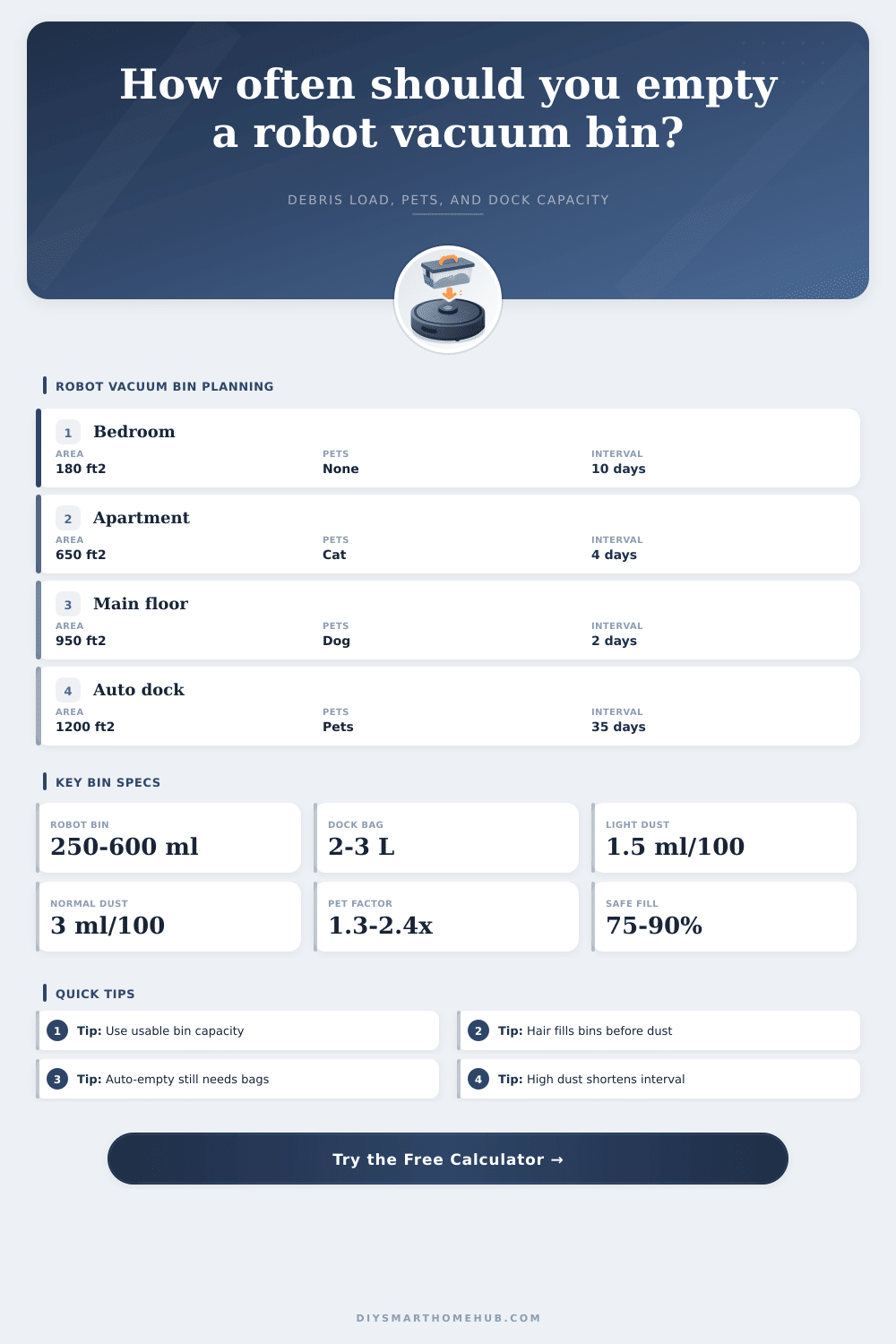
| Bedroom hard floor | 160 to 220 sq ft | Light dust, no pets | Small bins may last one to two weeks. |
| Apartment with one cat | 500 to 750 sq ft | Normal dust plus hair | Standard bins often need every few days. |
| Kitchen and dining zone | 180 to 350 sq ft | Crumbs and chair legs | Debris rate matters more than square footage. |
| Dog hair on carpet | 450 to 900 sq ft | High hair multiplier | Every run or every other run is common. |
| Auto-empty pet home | 900 to 1600 sq ft | High daily debris | Dock bag interval replaces bin interval. |
Your phone notifies you. The robot’s back at the base but it’s not charging? Oh, it’s waiting for you to take out the trash! Why? Because there is no room in can. If you’ve guessed or gone by marketing estimates, this will happen more frequent than you intended.
In most homes, the distinction between cleaning daily vs. Weekly will be determined by how fast junk accumulate in that little box. How does hair accumulate different from dust? What about how carpet traps far more volume than hardwood? There are no one-size-fits-all answers for what’s happening in your house.
How Often You Need to Empty Your Robot Vacuum
After plugging in your scenario. Such as the size of your floor space and what kind of stuff you want to clean, the calculator do the math for you (above). That means you don’t need to track air displacement or grams of dirt yourself. Instead, it blends your frequency and area with a factor for how dense the debris are. So, you get a reasonable estimate for how long until this thing reaches its max capacity.
As you’ll notice, fluffy particles like pet hair pack a whole lot more into the bin than flat ones like dust. A small amount of “dust” on your floors takes up far less space then even a little pet hair. The hair can quickly turn a nice 400 ml bin into a full one after just a few runs through.
Multipliers to your base debris rate reflect that not all dirt goes into the bin at an equal rate; it doesn’t weigh or pack equally. That’s why the tool account for it. Everyone thinks the printed bin capacity is what you should of care about. No it’s not. Lint and hair get into the bin and create air pockets, these pockets trip the full-bin sensor way before it is actualy filled to the brim.
So there is this thing called the “usable fill percentage” in the calculation model. Setting your safe fill limit at eighty percent or less provide a buffer for these unexpected overflow situations where the robot trips its sensor midway through cleaning. What happens then? When you open the lid, it seems like the bin is half empty. However, the sensor only care about how much space is taken up and whether air can flow freely. That’s why dialing down that percentage impacts your emptying schedule so much.
The amount of material that’s being picked up per pass also vary based off the type of floor it’s sitting on. Because hard surfaces enable the dust to slide right into the vacuum’s intake, the volume stays pretty compact and consistent. For carpets (particularly thick carpet), you’ll need to use a heavier hand with both brushing and suction so they can gets all the fluff out before it goes into the can. This causes the volume of what’s realy the same amount of dirt to appear larger.
Check out the reference tables on the page. They show how the profile of your surface affects these multiplier values, they also explain why your kitchen floor doesn’t need emptying as often as your living room rug. It isn’t just about square footage, it’s about what those squares hold.
The other kicker is that long hair/fur strands can easily tangle up your brush rolls and clog your intake which poses a problem for pet owners. Although the auto-empty docks helps some, the transfer system isnt flawless. There’s always some kind of junk leftover in the robot’s bin after every emptying. And that junk accumulates over time, creating a foundation layer of debris that shorten the dock bag life span.
Dock bags, too, will have their own shelf life depending on how much crap gets tracked into the home. For example, if you have more than one pet, or just live in a dusty house, the dock bag interval will be reduced drasticly vs. A clean-bedroom-only scenario. Expecting this helps avoid any nasty surprises from the machine telling you that it requires service earlier then expected.
So how does it work? We want to sync your cleaning needs with what’s physically possible for your device. If the math say you’ve got multiple days of runway remaining, there’s no reason to dump the contents of the bin on each run. And if you’re dealing with heavy shedding (think winter coats and mucky boots) or renovating and seeing lots of construction dust, you don’t want to think a month-long dock bag is going to go forever.
By knowing this timeline, you can plan for the manual steps around your own lifestyle instead of having to respond to them as they arise. This transforms the chore into an easy weekly task. This lets the robot work without stopping and keeps your floors free from constant fussing.