Solar Array Spacing Calculator
Estimate row pitch, clear gap, winter sun altitude, and how many rows fit your site before you lock in tilt, walkway room, and DC size.
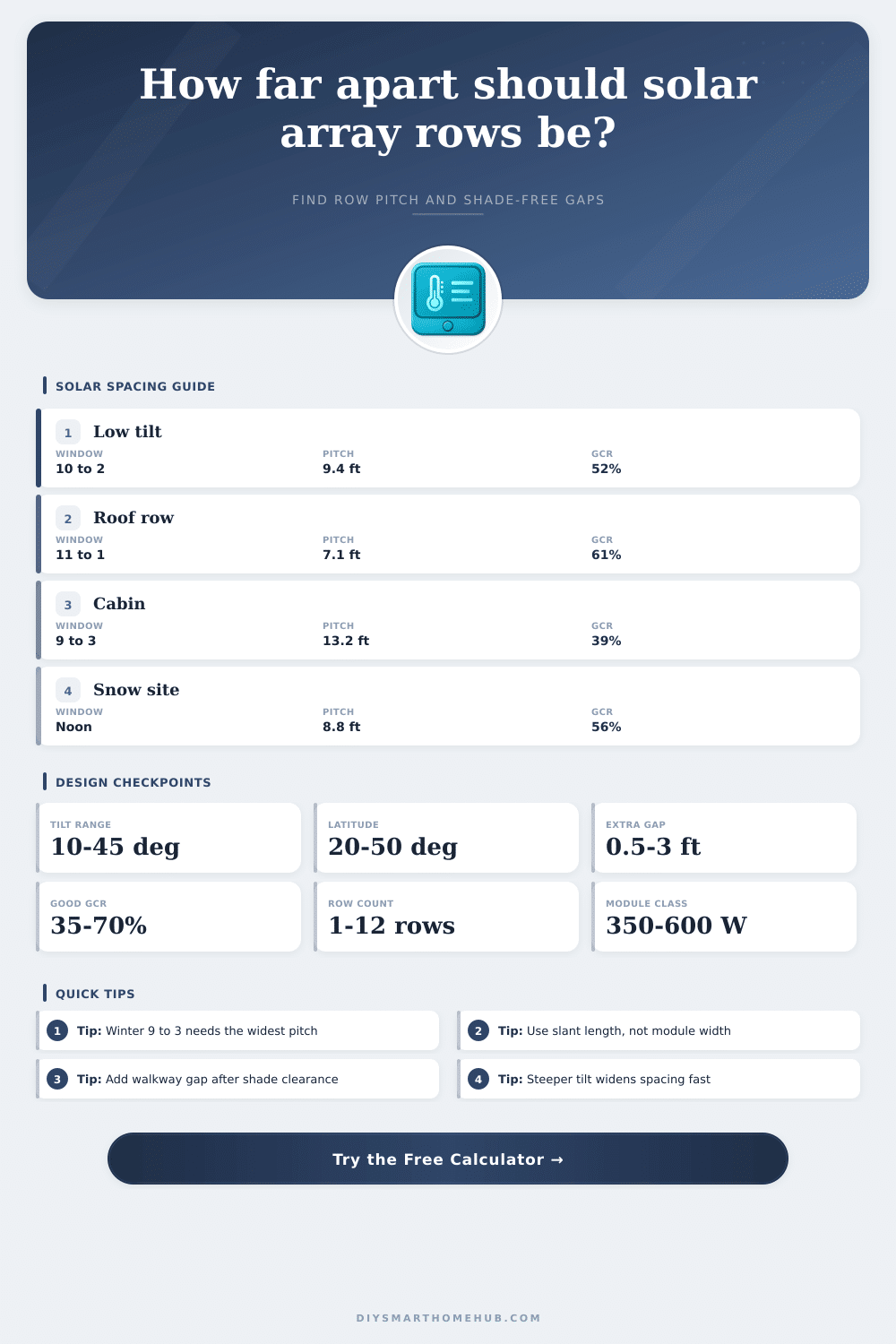
Noon-only spacing can look efficient, but winter 10 to 2 or 9 to 3 can need a much wider gap once the rear-edge shadow is included.
Calculate the true no-shade distance first, then add the walkway, snow room, or maintenance lane you still want after the shadow clears.
Solar panel spacings is another critical aspect of ground mount solar array performance. The spacing between solar panels will determine how much sunlight each individual solar panels can receive. If the rows of solar panels are too close together, the shadows that the solar panels will emit will land on the following rows of solar panels, reducing the amount of electricity that the solar panels will produce.
However, if the rows of solar panels are too far apart from each other, the solar panels will use up too much of an available land area, reducing the efficiency of the land use. Therefore, the installer must calculate the row pitch between the rows of solar panels to ensure that each solar panel receive enough sunlight throughout the year. The row pitch can be determined by calculating the angle of the sun and the angle of the slant of the solar panels.
How to Space Rows of Solar Panels
During the winter months, the sun are lower in the sky. The low angle of the sun produces long shadow. You can calculate the length of the shadow created by the solar panel by knowing the tilt of the solar panel and the angle of the sun.
The shadow will follow the incline of the solar panel, not the ground. Therefore, you will have to measure the slant length of the solar panel. The steeper the angle of the tilt of the solar panel, the longer the shadow that it will emit.
The longer the shadow that a row of solar panels emits, the more greater the row pitch that must be created between that row and the row behind it. The latitude of the location where the solar panels will be installed is one of the primary factors that will influence the decision of the spacing between the solar panels. The latitude will determine the angle of the sun in the sky.
For instance, if the panels are to be installed at a latitude of 40 degrees north, the sun will reach a certain height in the sky at noon, but it will be lower in the sky during the morning and the afternoon. Therefore, the layout of the solar panel array should be determined for a specific time window during the day, such as a 9 to 3 window. Otherwise, the system will not account for the shadows that are create by the low angle of the sun during the morning and the afternoon.
The row pitch can be calculated by adding the ground projection of the solar panel slant to the shadow gap. The shadow gap is the distance required between rows of solar panels to ensure that the shadow of one row dont touch the next row. The shadow gap is calculated by dividing the rise of the solar panel by the tangent of the suns altitude.
In addition to calculating the shadow gap, you also need to provide extra space for walkways to allow humans to walk between the rows of solar panels to clean the panels or repair them. The ground coverage ratio of a solar panel installation is the percentage of the land covered by the solar panels. This ratio determine how densely the solar panels are installed on the available land.
A ground coverage ratio of between 35 and 70 percent are common for solar panel installations. If the ground coverage ratio is too low, it wastes the land coverage area. If the ratio is too high, the panels may overheat due to a lack of ventilation between them.
When calculating the distance between rows of solar panels, it is essential not to use the width of the solar panel module but rather the slant length of the solar panel. The slant length of the panel is the distance from the bottom to the top of the panel. Additionally, you need to provide space for service paths to access the solar panels without walking in there shadow zones.
It will be difficult to maintain the solar panels if you dont include service paths. Including them in the shadow gap between rows will increase the row pitch of the solar panels unnecesarily. The spacing between rows of solar panels depends on the location of the panels and the environment in which they are install.
In areas with heavy snowfalls, the tilt angle of the solar panels should be steeper to allow the snow to clear off the panels. However, a steeper tilt angle will create longer shadows that the panels will cast. In tropical regions with less snowfall, the solar panel tilt angle can be lower.
Panels with a lower tilt angle can be placed closer together to increase the ground coverage ratio. The terrain on which the solar panels are installed can have additional shade on the panels that affect the panel spacing calculations. In addition to the terrain, other consideration for the installation of solar panels include wind loads on the panels and local building codes.
Wind loads on the panels and building codes may require modifications in the spacing of solar panels at the installation site. You should of also consider the terrain’s effect on the total efficiency. It is important to look at the hole site before you start.