Water Heater Energy Calculator
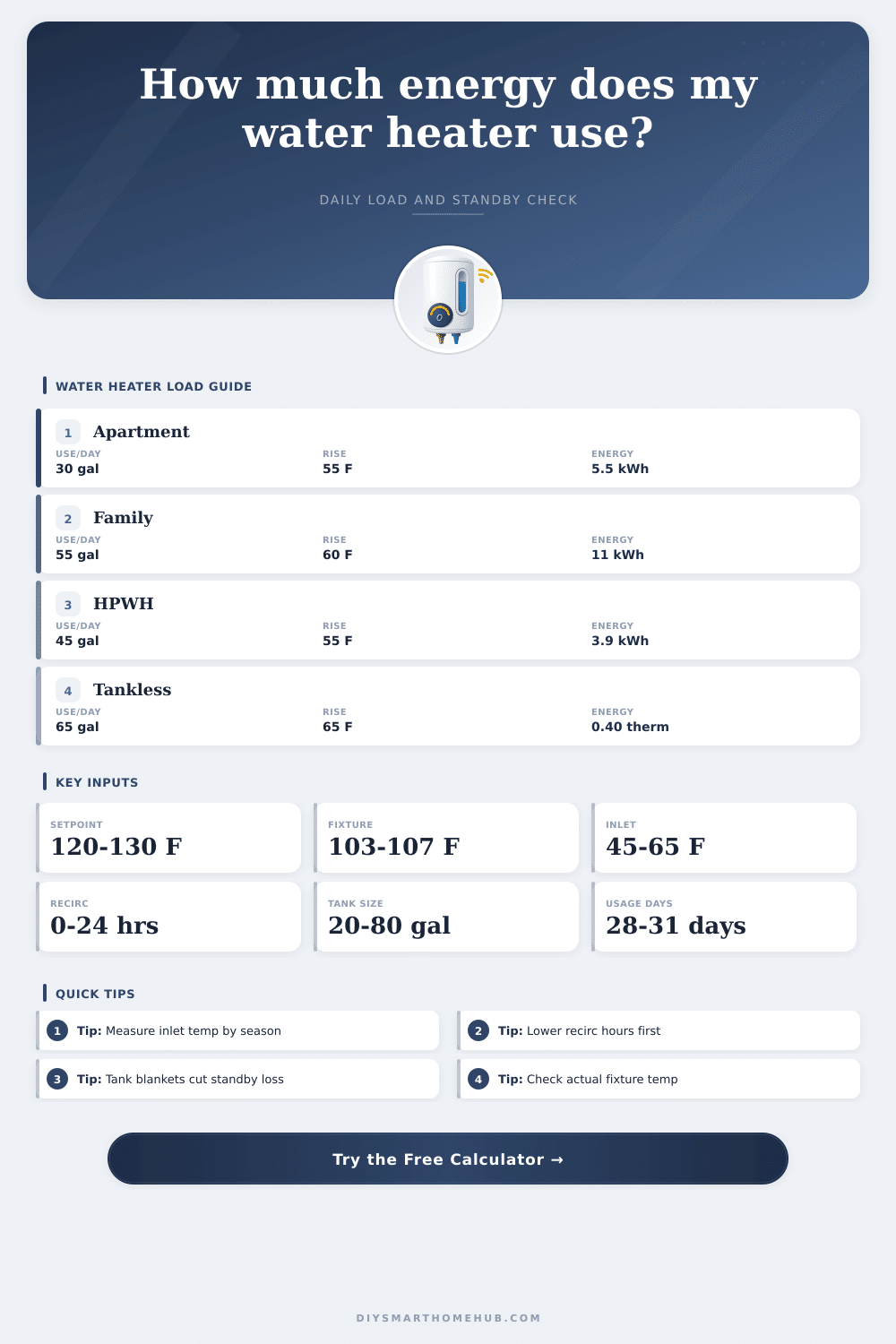
Estimate mixed-water demand, actual hot draw from the heater, standby loss, recirculation waste, runtime, and annual site energy across tank, heat pump, gas, and tankless setups.
💡Preset Scenarios
Loaded preset: Family 50-gal electric with moderate inlet water and short recirculation timer.
🔧Calculator Inputs
Use the actual mixed water at the tap, not pure hot gallons.
Formula basis: mixed-water draw is converted to actual hot-water draw using fixture mix ratio, then standby and recirculation losses are added before the heater efficiency or COP is applied.
📊Energy Results
Run the calculator to see how much of your load comes from the water you use versus the energy the system spends waiting and recirculating.
⚙Selected Device Snapshot
📘Reference Tables
| Use profile | Mixed use | Liters/day | Typical pattern |
|---|---|---|---|
| Studio or office sink | 15-25 gal | 57-95 L | Hand washing, short rinse, light dish loads |
| One-bed apartment | 28-38 gal | 106-144 L | One shower, one dishwasher, light laundry |
| Three-person household | 45-60 gal | 170-227 L | Morning shower stack with mixed sink use |
| Busy family day | 65-85 gal | 246-322 L | Back-to-back showers, laundry, and dishes |
| Inlet water | Fixture temp | Setpoint | Hot fraction |
|---|---|---|---|
| 45 F | 105 F | 125 F | 75% |
| 50 F | 104 F | 120 F | 77% |
| 58 F | 105 F | 125 F | 70% |
| 65 F | 103 F | 120 F | 69% |
| Heater family | Factor or COP | Standby ref. | Input rate |
|---|---|---|---|
| Electric resistance tank | 0.92 | 3200 BTU/day | 4.5 kW |
| Heat pump tank | 2.65 | 1800 BTU/day | 0.75 kW |
| Gas storage tank | 0.67 | 5200 BTU/day | 38k BTU/h |
| Tankless gas | 0.93 | 450 BTU/day | 160k BTU/h |
| Storage size | Electric first hour | Gas first hour | Heat pump first hour |
|---|---|---|---|
| 30 gal | 41-46 gal | 55-62 gal | 36-40 gal |
| 40 gal | 54-60 gal | 70-78 gal | 48-54 gal |
| 50 gal | 67-74 gal | 86-96 gal | 60-68 gal |
| 80 gal | 108-118 gal | 137-150 gal | 97-108 gal |
💻Device and Spec Comparison Grid
💧Tip Boxes
Measure the real temperature spread
Use inlet and fixture readings from the same season. A winter inlet that drops 10 F can move the hot-water fraction and daily heating load much more than a small change in tank size.
Separate standby loss from use-driven load
Recirculation and standby waste show up even on low-use days. If your calculated loss share is high, trim loop hours or add insulation before changing the whole heater class.
Warm water accounts about around 18% of the whole energy in homes. It commonly is the second biggest expense of energy. Annually families spend between 400 and 600 dollars for warm water used for wash plates, shower and wash clothings.
Water heaters of various kinds now consume around 13 percentages of the energy in American homes, more than cook and refrigeration together. Some informations point that heaters take 12% from domestic energy.
Different Home Water Heaters and How They Save Energy
Various heaters use different energy sources. In many American regions propane answers for fuel heaters, classical storage models and combined systems for water and space-heating. Solar energy is available through United States, especially richly in the southwest, so solar water heaters operate well here.
Those solar systems warms water by means of sun and preserve it in reservoir. They can receive gaseous or electrical help. That happens when the heat in the reservoir lowers.
Warm pump water heaters form part of ENERGY STAR domestic upgrade. They two or three times more work than usual electric resistance heaters. The devices move heat of place to another by means of electricity, instead of generate itself.
Warm pump with ENERGY STAR label consumes only quarter of energy comparatively to standard model. Split warm pump has internal tank bound to exterior compressor. This ENERGY STAR type warms water effectively even in -25°F outside.
New models inform you about your energey consumption directly in the phone.
Tankless heaters operate only around 2 hours day because they warms water only during usage. They 24 until 34% more work than storage in homes with 41 gallons or fewer warm water daily. At 86 gallons or more they surpass 8 until 14%.
You also calls them on-demand water heaters. And condensing and non-condensing gas tankless are the most efficient and saving. They cost less because do not require to preserve tank of warm water.
UEF ratings help to estimate efficiency. You classifies heaters in one from four groups according to warm water use, called bins. The rating you gives according to the first hour rating.
Higher UEF shows bigger efficiency and fewer costs for function comparatively with others in same bin. No-solar heater can win ENERGY STAR certification if it accomplishes UEF criteria.